



Eggplant is perhaps the most enigmatic member of the nightshade family. To some, it is a culinary masterpiece capable of mimicking the richness of meat; to others, it is a puzzling, spongy vegetable that seems to defy a simple flavor definition. If you have never tried it, you are likely asking: What does eggplant taste like?
The answer is not a single note but a transformation. In its raw state, eggplant is firm, somewhat bland, and carries a distinct edge of bitterness. However, once heat is applied, it undergoes a radical metamorphosis.
Depending on how you cook it, eggplant can become silky and sweet, smoky and savory, or even crispy and decadent.
The USDA FoodData Central confirms that eggplant is low in calories yet rich in fiber and anthocyanins—compounds linked to reduced inflammation.
Because eggplant is essentially a botanical sponge, its taste is often defined more by the ingredients it is cooked with than by its own inherent flavor. This guide will walk you through the nuances of the eggplant taste description,
comparing it to familiar foods and explaining why the cooking method is the most important factor in whether you will enjoy this ancient “king of vegetables.” For a delicious application, try our eggplant parm pizza that showcases how eggplant absorbs complementary flavors beautifully.
Eggplant Taste Description: Raw vs. Cooked
To understand how eggplant tastes, one must first distinguish between the raw fruit and its cooked counterpart. While technically a fruit, eggplant is treated as a vegetable in the kitchen, and for good reason—you will almost never find it served raw.
The Profile of Raw Eggplant
If you were to take a bite of a raw eggplant, the experience would be underwhelming and potentially unpleasant. What does raw eggplant taste like? It is mild, slightly vegetal, and notably bitter. The texture is dry, firm, and spongy, almost like a dense floral foam.
Research from the Journal of Food Science notes that raw eggplant contains solanine, a natural compound that contributes to its astringent quality.
The bitterness in raw eggplant comes from its seeds and a compound called solanine. In 2026, wide modern varieties have been bred to be less bitter, but the raw sensation remains “sharp” and astringent.
Furthermore, the raw flesh has a slight “peppery” finish that can tingle the tongue, which is why it is rarely eaten without heat. The Mayo Clinic advises that cooking nightshade vegetables improves digestibility and nutrient bioavailability.
The Transformation of Cooked Eggplant
What does cooked eggplant taste like to eat? When heat hits the eggplant, the cellular structure collapses. The bitterness evaporates, and the mild, earthy sweetness of the flesh begins to shine. Cooked eggplant is often described as having a “meaty” or “creamy” profile.
It loses its firm sponginess and becomes tender, often melting away the moment it hits the palate. Because of its neutral baseline, it acts as a vessel for fats—like olive oil or butter—and aromatics like garlic, onion, and cumin.
Understanding whether olive oil is good for cooking helps you select fats that enhance rather than overwhelm eggplant’s delicate flavor.
What Does Eggplant Taste Like When Cooked?
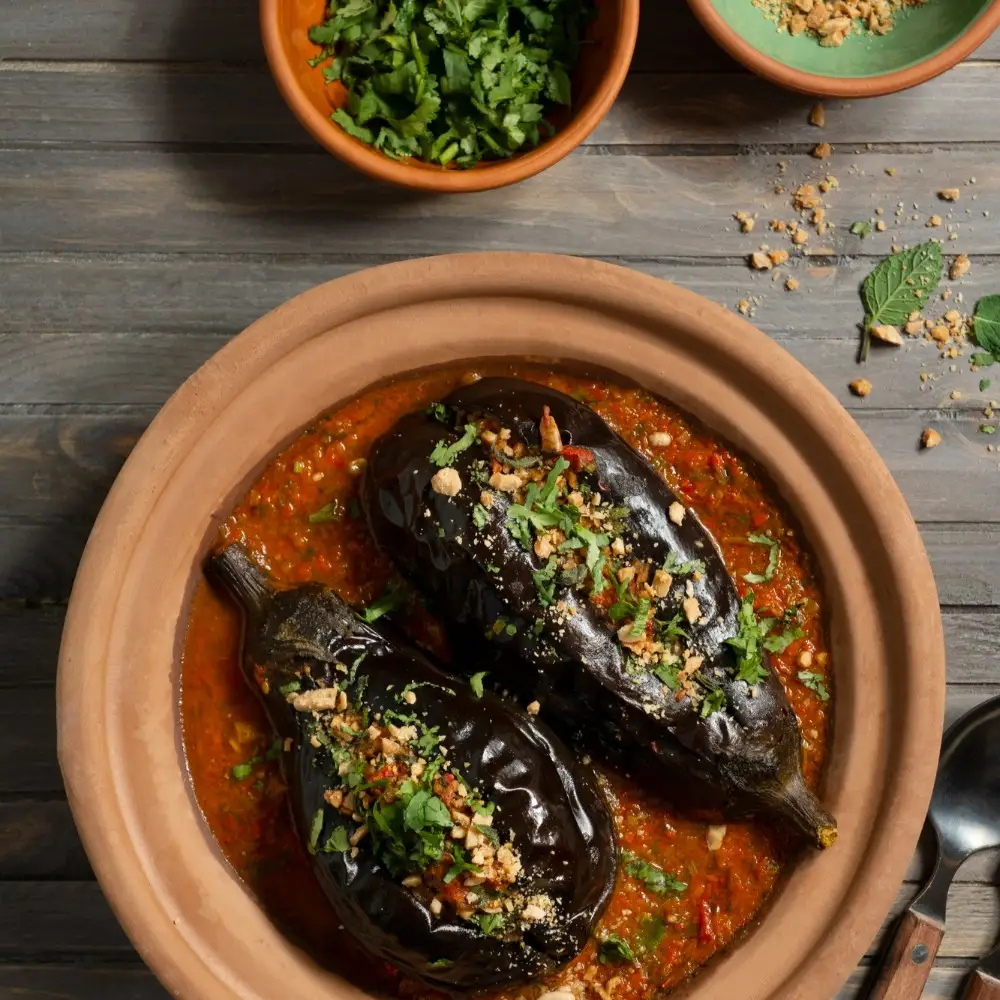
The magic of this vegetable happens in the pan, the oven, or over an open flame. What does eggplant taste like when cooked properly? It is a savory, umami-rich experience.
Creamy and Savory Nuances
Properly cooked eggplant develops a rich, buttery consistency. It doesn’t have a strong “green” flavor like broccoli or spinach; instead, it leans toward an earthy, mellow taste. Some people detect subtle nutty notes, especially when the skin is left on, as the skin contains more concentrated flavors than the pale flesh.
The Academy of Nutrition and Dietetics emphasizes that vegetable skins often contain the highest concentration of antioxidants.
The Importance of Heat
If undercooked, eggplant remains rubbery and retains its raw bitterness. This is the primary reason why beginners often dislike it. However, once it reaches the “creamy” stage, the eggplant’s flavor becomes deep and satisfying.
It is often compared to a “blank canvas.” If you cook it with soy sauce and ginger, it tastes Asian-inspired; if you roast it with tahini and lemon, it takes on the bright, nutty characteristics of the Middle East. For more vegetable prep inspiration, see our guide on how to cook broccoli.
What Does Eggplant Smell Like?
Scent is the precursor to taste, and the aroma of eggplant is just as transformative as its flavor.
Raw vs. Cooked Aroma
Raw eggplant has a very faint, almost non-existent smell. If you sniff a fresh one, it may smell slightly “green” or like a very mild bell pepper. It is clean and earthy.
However, what does eggplant smell like when it hits the grill? It develops a rich, smoky, and almost intoxicating aroma. When roasted, it smells sweet and caramelized.
Because of its high water content, the steam released during cooking carries the scents of the oils and spices it is paired with. The Harvard T.H. Chan School of Public Health notes that aromatic compounds released during cooking can enhance both flavor perception and nutrient absorption.
Signs of Spoilage
Knowing the smell of a healthy eggplant is vital. If an eggplant smells sour, fermented, or chemically sharp, it has likely gone bad.
A fresh eggplant should have no odor or a very light, earthy scent. If you slice it open and it smells pungent, the seeds have likely oxidized, and the fruit is past its prime. The Cleveland Clinic provides guidance on identifying fresh produce for optimal safety and nutrition.
Does Eggplant Taste Like Other Vegetables?
When trying to describe the eggplant taste, comparisons to other common foods can be helpful, though no single food is a perfect match.
Eggplant vs. Zucchini
The most frequent question is: Does eggplant taste like zucchini? In terms of texture, they are cousins. Both are soft and moisture-heavy when cooked. However, zucchini is much “brighter” and more watery.
Zucchini has a fresh, grassy taste, whereas eggplant is deeper, heartier, and more umami-forward. Eggplant is also significantly more bitter than zucchini if not salted or cooked well.
Eggplant vs. Potatoes
Do eggplants taste like potatoes? Not exactly. While they both have a starchy quality and can be used to bulk up stews, potatoes are much denser and grainier. Eggplant is “silkier.” However, in dishes where eggplant is fried or roasted until brown, it can mimic the comforting, savory skin of a roasted potato.
Why Eggplant is Called “The Poor Man’s Meat”
Historically, eggplant has been used as a meat substitute. Does eggplant taste like meat? On its own, no. However, it has a similar “chew” and density to certain cuts of meat. When breaded and fried, it can mimic the texture of veal or chicken.
This is why it is the star of “steaks” and burgers in vegetarian cooking—it satisfies the craving for a heavy, savory main course. Understanding whether fried food is bad for heart health helps you balance indulgent preparations with heart-healthy choices.
What Does Fried Eggplant Taste Like?
If you are looking for the most “crowd-pleasing” version of this vegetable, look no further than the frying pan. What does fried eggplant taste like? It is the ultimate comfort food.
Texture Contrast
The primary appeal of fried eggplant is the contrast. The outside—usually breaded or floured—becomes exceptionally crispy and salty. The inside, however, turns into a warm, custardy cream.
Flavor Absorption
Because eggplant is porous, it absorbs the flavor of the frying oil. When fried in high-quality olive oil, it takes on a Mediterranean richness. The bitterness is completely replaced by a savory, golden-brown flavor known as the Maillard reaction.
This is often the gateway dish for people who claim they don’t like vegetables. The American Heart Association recommends using heart-healthy oils and moderation when enjoying fried preparations.
What Does Roasted, Grilled, and Pickled Eggplant Taste Like?
The method of preparation is the single greatest determinant of the final eggplant taste description. By changing the heat source or the preserving medium, you can pull entirely different notes out of the same vegetable.
The Sweetness of Roasting
When you roast eggplant in an oven at high temperatures, the natural sugars within the flesh begin to caramelize. What does roasted eggplant taste like? It becomes remarkably sweet and mellow. The “sharp” edges of the vegetable are rounded off, leaving behind a rich, earthy flavor that is often compared to a savory custard.
If roasted whole until the skin shrivels, the interior becomes so soft it can be scooped out and used as a base for dips like Baba Ganoush. Pair it with our homemade marinara sauce for a flavor-packed Mediterranean experience.
The Smokiness of the Grill
What does grilled eggplant taste like? Grilling introduces a charred, smoky element that no other method can replicate. Because eggplant is so porous, it acts as a “smoke trap,” absorbing the aroma of the charcoal or wood fire.
This results in a deep, umami-heavy flavor that is almost reminiscent of a grilled steak. The skin becomes thin and crisp, while the inside remains juicy and tender. The Johns Hopkins Medicine notes that grilling vegetables preserves fiber and phytonutrients better than boiling.
The Tang of Pickled Eggplant
Pickling moves the eggplant in a completely different direction. What does pickled eggplant taste like? In Mediterranean and Middle Eastern cultures, eggplant is often preserved in vinegar, oil, and garlic. The result is a tangy, acidic, and sharp flavor profile.
The eggplant loses its creaminess and takes on a firmer, slightly “squeaky” texture. It is an explosion of sour and salty notes that cut through the richness of meats and cheeses.
What Does Eggplant Parmesan Taste Like?
For many people, “Parm” is the only way they enjoy this vegetable. What does eggplant parmesan taste like? It is a symphony of Italian flavors where the eggplant itself often takes a backseat to the toppings.
A Texture-First Experience
In an Eggplant Parmesan, the flavor is dominated by the acidity of the tomato sauce, the saltiness of the Parmesan cheese, and the creaminess of the mozzarella. The eggplant acts as the structural foundation—much like the pasta sheets in a lasagna.
Why It Is a Beginner Favorite
What does eggplant parm taste like to a skeptic? It tastes like comfort. Because the eggplant slices are usually breaded and fried before being baked, the bitterness is entirely gone. Many people find that the texture in this dish is closer to a savory pancake or a tender cut of meat than a vegetable.
It is the best way to introduce the flavor to children or picky eaters. For air fryer enthusiasts, explore our PowerXL air fryer recipes for beginners to achieve crispy results with less oil.
What Does Eggplant Taste Like by Variety?
Not all eggplants are created equal. In 2026, global markets offer a wide array of varieties, each with a distinct “personality.”
Chinese Eggplant
What does Chinese eggplant taste like? These are the long, thin, light-purple fruits often found in stir-fries. They are significantly sweeter and milder than the standard Globe eggplant. They have very few seeds, which means they are almost never bitter.
The skin is incredibly thin, so it melts away during cooking rather than becoming tough.
Japanese Eggplant
Similar in shape to the Chinese variety but with a darker purple hue, what does Japanese eggplant taste like? It is exceptionally creamy. It has a “melt-in-your-mouth” quality that makes it a favorite for Nasu Dengaku (miso-glazed eggplant). Its flavor is very delicate, with a clean, nutty finish.
Thai Eggplant
These are small, round, and often green or white-speckled. What does Thai eggplant taste like? Unlike its cousins, the Thai variety is quite firm and carries a notable bitterness. It does not “melt” when cooked; instead, it retains a slight crunch. In Thai green curries, it provides a sharp, vegetal contrast to the sweet coconut milk.
White Eggplant
While beautiful to look at, what does white eggplant taste like? The white variety is often described as the “champagne” of eggplants. It is the least bitter of all the purple varieties, with a very firm skin and a dense, creamy interior.
Some chefs believe it has a slightly stronger “mushroom-like” flavor than the purple types.
Is Eggplant an Acquired Taste?
Despite its versatility, the question remains: is eggplant an acquired taste? For many, the answer is yes, but usually due to texture rather than flavor.
The Texture Hurdle
Most people who “dislike” eggplant are reacting to the spongy or “slimy” texture that results from improper cooking. If you eat an undercooked eggplant, the sensation is dry and rubbery. If you eat one that has soaked up too much oil, it can feel greasy.
Overcoming the Bitterness
Because humans are biologically wired to be wary of bitter flavors (which can signal toxins in nature), the slight bitterness of older eggplants can be off-putting. However, once a person experiences a well-prepared, creamy, and savory dish, they often find that the “umami” profile of the eggplant is actually quite addictive.
The World Health Organization encourages experimenting with diverse vegetables to expand palate preferences and nutrient intake.
What Does Eggplant Taste Like According to Reddit & Real People?
If you search what does eggplant taste like ” on Reddit, you will find a polarized community. The “Real People” perspective offers a raw look at how this vegetable is perceived.
- The “Sponge” Description: A common sentiment on Reddit is that eggplant “tastes like whatever you want it to.” Users often joke that if you cook it with enough garlic and butter, it tastes like garlic and butter.
- The “Mushroom” Comparison: Many users compare the flavor to a large Portobello mushroom—earthy, dense, and savory, but without the “fungal” aftertaste.
- The “Squishy” Debate: There is a divide between those who love the silken texture of a Chinese stir-fry and those who find it “grossly soft.” The consensus is that the preparation determines the love-hate relationship.
Different Ways to Cook Eggplant & How Taste Changes
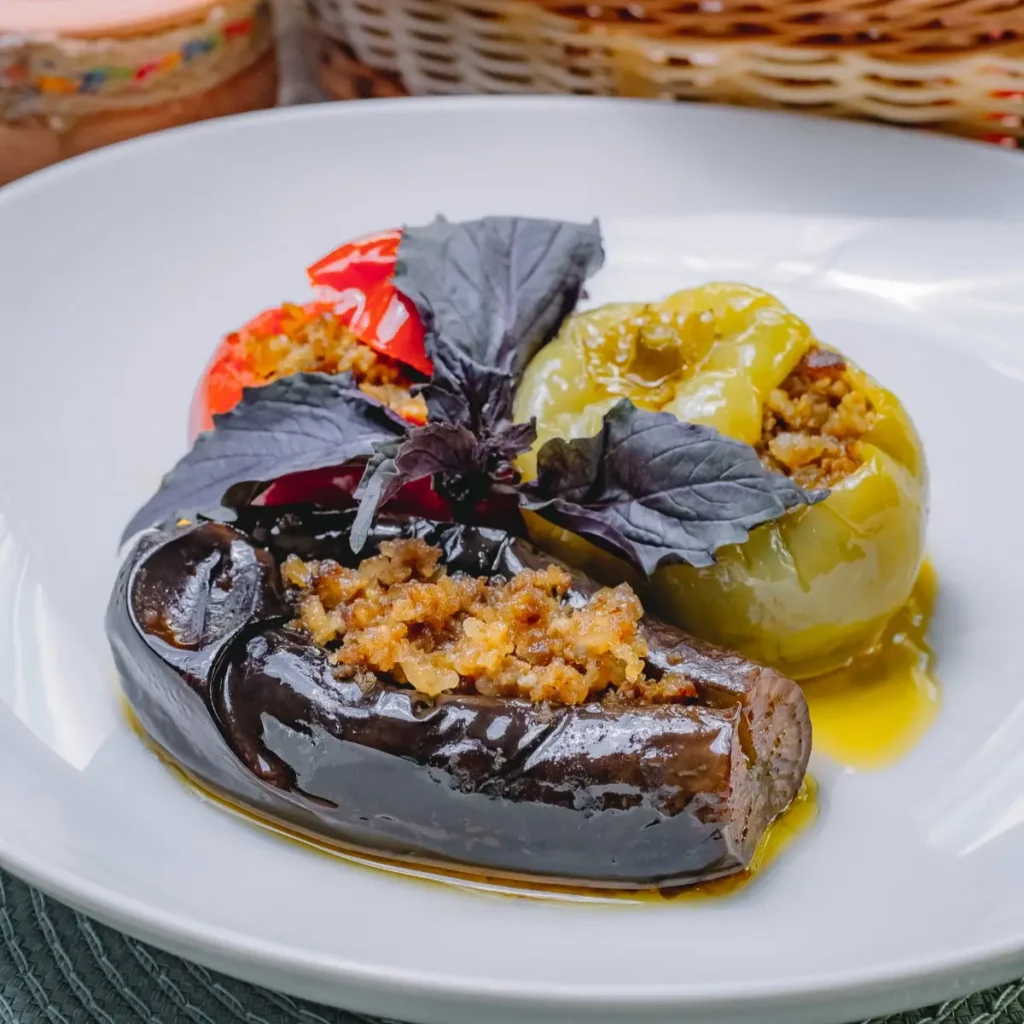
The reason eggplant, what does it taste like, is such a difficult question to answer is that the “personality” of the vegetable shifts based on the heat intensity and moisture levels of the cooking method.
Baking and Roasting
When you bake eggplant, you are essentially dehydrating it while caramelizing the sugars. This results in a concentrated, sweet, and nutty flavor. If you bake it in cubes, you get little pops of savory “candy.” If you bake it whole, the flavor becomes deep, earthy, and exceptionally mild, making it perfect for blending into smooth sauces.
Stewing and Braising
In dishes like Ratatouille or Caponata, the eggplant is simmered with acidic ingredients like tomatoes and vinegar. In this environment, the eggplant loses its individual flavor and becomes a “flavor sponge,” absorbing the bright acidity and herbal notes of the surrounding sauce. The taste becomes rich, complex, and silky.
Stir-Frying
This is the preferred method for Chinese and Japanese varieties. High-heat stir-frying sears the exterior quickly, trapping the moisture inside. This keeps the eggplant’s flavor fresh and clean, with a slight “snap” to the skin and a custardy interior.
Research published in MDPI Foods confirms that quick-cooking methods preserve more heat-sensitive nutrients than prolonged boiling.
Best Ways to Eat Eggplant for Beginners
If you are a first-timer worried about the texture or bitterness, choosing the right “entry-point” dish is crucial. What’s the best way to eat eggplant when you’re just starting out?
- Baba Ganoush: This is the ultimate “safe” bet. Because the eggplant is roasted, peeled, and puréed with tahini, lemon, and garlic, you get all the creamy, smoky benefits without the spongy texture that some people find off-putting.
- Thin-Sliced Fried Eggplant: Think of these like “eggplant chips.” Sliced very thin, breaded, and fried until dark golden brown, they lose almost all of their “vegetal” identity and taste like savory, crunchy treats.
- Miso-Glazed Eggplant: The saltiness of the miso paste perfectly counters the natural sweetness of the eggplant. It is one of the most flavor-forward preparations in the world.
For those managing blood sugar, eggplant is an excellent low-glycemic option. Explore our guides on pumpkin recipes for diabetics and whether black beans are good for diabetics for more diabetes-friendly meal inspiration. The American Diabetes Association recommends non-starchy vegetables like eggplant as foundational foods for balanced blood sugar management.
Eggplant Recipes That Highlight Flavor
To truly understand what eggplant tastes like, you should try recipes that allow its unique profile to shine rather than hiding it under layers of cheese.
- Authentic Baba Ganoush: By charring the skin until it is black, you infuse the flesh with a primal, smoky flavor. Mixed with nutty sesame paste (tahini), it showcases the eggplant’s ability to be both savory and refreshing.
- Pasta alla Norma: This Sicilian classic pairs fried eggplant cubes with salty ricotta salata and sweet tomato sauce. Here, you can taste the “meaty” quality of the eggplant as it stands up to the heavy pasta and acidic sauce.
- Szechuan Spicy Eggplant: This dish uses the sweetness of Chinese eggplant to balance out the heat of ginger, garlic, and chili. It demonstrates how the vegetable can handle intense spice without losing its own mellow, earthy character.
For weight management goals, understanding foods that burn belly fat fast can complement your plant-forward cooking strategy.
Frequently Asked Questions
What does eggplant taste like?
Eggplant has a very mild, earthy, and slightly sweet flavor. Its most defining characteristic is its ability to absorb the flavors of whatever it is cooked with, taking on savory, smoky, or tangy notes depending on the recipe.
The National Institutes of Health confirms that vegetable flavor profiles are heavily influenced by cooking methods and ingredient pairings.
Does eggplant taste like zucchini?
No. While they share a similar soft texture when cooked, zucchini is much greener and more watery. Eggplant is deeper, heartier, and has a more complex, umami-rich profile.
What does eggplant taste like raw?
Raw eggplant is bitter, dry, and spongy. It has a slightly “peppery” finish that can be astringent on the tongue. It is almost never eaten raw because heat is required to break down its bitterness and soften its texture.
Does eggplant taste like meat?
It does not taste like animal fat or protein, but it has a “meaty” texture and a savory depth (umami) that allows it to function as a satisfying meat substitute in dishes like burgers or steaks.
What does eggplant Parmesan taste like?
It tastes like a rich, savory Italian feast. The dominant flavors are tomato sauce and melted cheese, but the eggplant provides a tender, melt-in-your-mouth foundation that mimics the texture of a layered lasagna.
Conclusion
In the final assessment, the answer to what does a eggplant tastes like is limited only by your imagination in the kitchen. It is a rare ingredient that can transition from a crispy, salty appetizer to a sweet, silken main course.
While its raw bitterness and spongy texture can be intimidating to beginners, those who give it a second chance—and a good sear—will discover a world of earthy sweetness and savory satisfaction.
If you enjoy mushrooms, zucchini, or roasted root vegetables, you will likely find a friend in the eggplant. It is a nutritional powerhouse, a texture marvel, and a true culinary chameleon that has earned its place on the global table for centuries.
Whether you fry it, roast it, or grill it, the eggplant is undoubtedly a flavor journey worth taking. For more balanced meal inspiration, explore our chicken and broccoli recipe to complement your eggplant creations.
Authoritative References
- USDA FoodData Central. (2026). Eggplant, raw. https://fdc.nal.usda.gov/
- Harvard T.H. Chan School of Public Health. (2026). The Nutrition Source: Vegetables. https://www.hsph.harvard.edu/nutritionsource/vegetables/
- Mayo Clinic. (2026). Nutrition and healthy eating. https://www.mayoclinic.org/healthy-lifestyle/nutrition-and-healthy-eating
- American Heart Association. (2026). Healthy eating recommendations. https://www.heart.org
- Academy of Nutrition and Dietetics. (2026). Smart ways to prepare vegetables. https://www.eatright.org/
- Cleveland Clinic. (2026). Healthy cooking methods. https://my.clevelandclinic.org/health
- Johns Hopkins Medicine. (2026). Nutrition and food safety. https://www.hopkinsmedicine.org/health
- World Health Organization. (2026). Healthy diet fact sheet. https://www.who.int/health-topics/healthy-diet
- National Institutes of Health. (2026). Dietary supplements and nutrition. https://www.nih.gov
- American Diabetes Association. (2026). Non-starchy vegetables. https://www.diabetes.org/healthy-living

