



In the rapidly evolving culinary landscape of 2026, marine vegetables have moved from the periphery of health food stores to the center of global diets. Is Seaweed Vegetarian? As plant-based eating becomes the standard for millions, a seemingly simple question has sparked intense debate in digital forums and restaurant kitchens.
At first glance, the answer appears obvious—it grows in the water, undergoes photosynthesis, and isn’t an animal. However, the confusion often stems from its close association with seafood, its unique biological classification, and the hidden ingredients found in processed seaweed products. FDA seafood guidance resources.
Whether you are snacking on crispy nori sheets, enjoying a vibrant seaweed salad, or rolling vegetarian sushi, understanding the dietary status of this marine superfood is essential.
This guide will clarify the persistent question of whether seaweed is veg or non-veg, explore its status within the vegan community, and dive deep into the science of why this “sea vegetable” isn’t technically a plant at all.
By the end of this authority guide, you will have a comprehensive understanding of what seaweed is, its nutritional profile, and how to navigate restaurant menus with confidence. Gut health and plant-based nutrition.
What Exactly Is Seaweed?
To answer the question of edibility and dietary category, we must first define the organism. Many people ask, ” Is seaweed a plant? and are surprised to find that the scientific community offers a more nuanced answer.
The Biological Definition
Seaweed is a collective term used to describe various species of marine algae—specifically macroalgae. Unlike the terrestrial plants we grow in our gardens, seaweed belongs to a diverse group of organisms that lack the complex vascular systems found in land plants. While it performs photosynthesis and produces oxygen,
it is biologically distinct. This is why many scientists argue that seaweed is not a plant in the traditional sense, but rather a complex form of algae. Harvard Health fiber guidance.
Is Seaweed Living or Non-Living?
From a biological standpoint, is seaweed living or non-living? Seaweed is undeniably a living organism. It breathes, grows, reproduces, and responds to its environment. It consumes nutrients from the seawater and converts sunlight into energy.
The confusion sometimes arises because dried seaweed—the kind found in snacks—appears “inanimate,” but in its natural habitat, it is a thriving part of the marine ecosystem. Natural wellness ingredients.
Common Edible Varieties
When we discuss eating seaweed, we are usually referring to three main categories: Red Algae: Includes Nori (used in sushi) and Dulse. Brown Algae: Includes Kelp, Wakame (common in miso soup), and Kombu. Green Algae: Includes Sea Lettuce and Umibudo (sea grapes). American Heart Association seafood nutrition.
Is Seaweed Vegetarian or Non-Vegetarian?
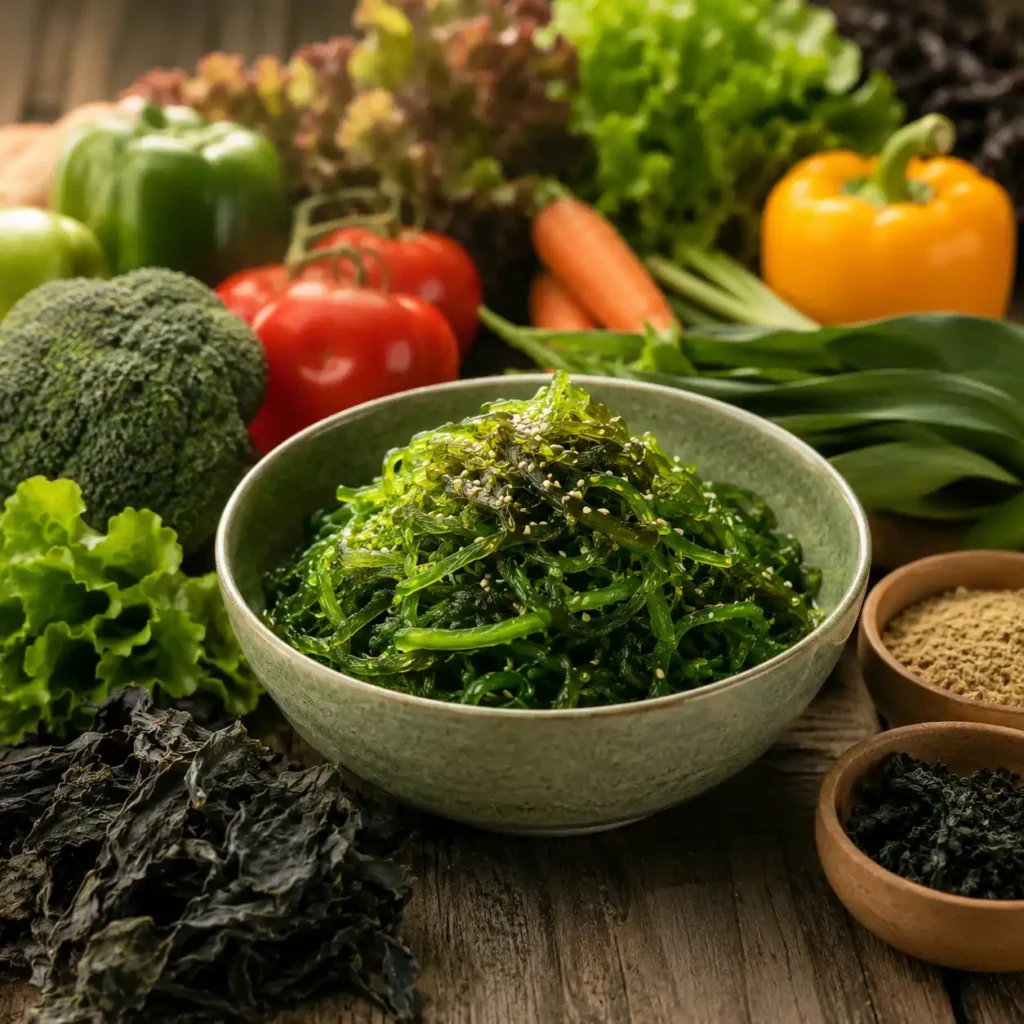
The core of the dietary debate revolves around one question: Is seaweed vegetarian or non-vegetarian? To provide a definitive answer, we must look at the standard definition of vegetarianism. NIH iodine health factsheet.
The Summary Verdict: A Resounding “Yes”
By every standard dietary definition, seaweed is vegetarian. A vegetarian diet excludes the flesh of animals (meat, poultry, and fish). Since seaweed is a form of algae and contains no animal flesh, it is 100% compatible with a vegetarian lifestyle.
If you have been browsing seaweed vegetarian Reddit threads, you may have seen minority opinions suggesting otherwise, but these are typically based on misconceptions about the “living” nature of algae or concerns about cross-contamination in the ocean. Plant-based protein sources.
Why Do People Think Seaweed is Non-Veg?
There are three main reasons why someone might ask, “Is seaweed veg or non-veg?”: The “Fishy” Flavor: Seaweed contains high levels of glutamate and dimethyl sulfide, which give it an “oceanic” or “fishy” umami flavor. This leads some to believe it contains fish extracts.
Sushi Association: Because seaweed is almost always paired with raw fish in traditional Japanese cuisine, it has become “guilty by association” in the minds of some consumers. NCCIH wellness resources.
Marine Ecosystems: Seaweed grows in the ocean alongside fish and crustaceans. Some extreme interpretations of vegetarianism worry about microscopic sea life (like tiny shrimp or plankton) that may be attached to the seaweed during harvest. However, commercial seaweed is thoroughly cleaned and processed.
For the vast majority of people, the answer remains clear: a vegetarian can eat seaweed without any conflict of interest. Metabolism and wellness tips.
Is Seaweed Vegan?
For those following a stricter path, the question shifts: Is seaweed vegan? Veganism excludes not just animal flesh, but all animal-derived by-products (like honey, dairy, and eggs) and seeks to avoid animal exploitation EPA pesticide safety information.
Definition and Compliance
Seaweed is vegan by its very nature. It does not require any animal input to grow, and its harvest does not inherently involve animal exploitation. In its raw, dried, or roasted form, it is one of the most vital staples of a vegan diet due to its unique nutrient density. Healthy weight management strategies.
Potential Exceptions in Processed Products
While the seaweed itself is vegan, “processed seaweed products” may not be. When buying flavored seaweed snacks or restaurant dishes, vegans should watch for: Bonito Flakes: Dried fish used in some seasonings. Honey: Sometimes used as a sweetener in “honey-roasted” seaweed snacks.
Shrimp Paste: Occasionally used in spicy seaweed varieties or Kimchi-flavored nori. Always check the ingredient label, but rest assured that the base ingredient—the algae—is entirely vegan. Understanding organic certification.
Does Seaweed Count as a Vegetable?
We know it’s vegetarian, but does seaweed count as a veggie in your daily food pyramid? This is a matter of botanical versus culinary classification of the WHO’s healthy diet guidelines.
Botanical vs. Culinary Groups
Botanically, seaweed is an algae, not a vegetable. However, culinarily and nutritionally, it is classified as a marine vegetable. It provides many of the same benefits as land vegetables—fiber, vitamins, and minerals—but in much higher concentrations. Meal prep strategies for success.
What Food Group is Seaweed In?
In modern dietary guidelines, seaweed is often placed in the “Vegetables” or “Superfoods” category. It serves as an excellent vegetable substitute for those who may have difficulty eating enough land-based greens. Because it is so nutrient-dense, even small amounts (like the sheet around a sushi roll) contribute to your daily vegetable intake.
If you are tracking your “greens,” seaweed absolutely counts toward your goal of a balanced, plant-forward diet. FAO dietary guidelines.
Is Seaweed Healthy? Nutritional Benefits Explained
Now that we have established that seaweed is healthy and vegetarian, let’s explore the specific nutritional “why” behind its superfood status.
The Iodine Powerhouse
Seaweed is perhaps the world’s best natural source of iodine. Iodine is a critical mineral for thyroid health, which regulates your metabolism, energy levels, and hormonal balance. Since iodine is rarely found in land-based vegetables, seaweed fills a massive gap in the vegetarian diet. Harvard T.H. Chan School of Nutrition.
Essential Vitamins and Minerals
Vitamin K: Essential for bone health and blood clotting. B-Vitamins (including B12): Some types of seaweed, like Nori, contain bioactive forms of B12, a nutrient often lacking in vegan diets. Iron and Calcium: Gram for gram, many seaweeds contain more calcium than milk and more iron than spinach.
Gut Health and Metabolism
Seaweed is rich in unique fibers called sulfated polysaccharides. These have been shown to increase the growth of “good” gut bacteria and support the lining of the digestive tract. Furthermore, compounds like fucoxanthin (found in brown seaweed) are currently being studied for their ability to aid in fat metabolism and weight management. Women’s nutrition essentials.
Why Seaweed Is Not Considered a Plant
To the casual observer, seaweed looks like a plant. It is green, it grows in the ground (or seabed), and it uses sunlight to survive. However, if you ask a marine biologist, “Why isn’t seaweed considered a plant?” they will point to several fundamental structural differences.
The Lack of Vascular Systems
Terrestrial plants have complex vascular systems—xylem and phloem—that transport water and nutrients from the roots to the leaves. Seaweed, being macroalgae, does not have these. Since it is submerged in a nutrient-rich medium (the ocean), every part of the seaweed can absorb nutrients directly from the water. WebMD nutrition resources.
No True Roots, Stems, or Leaves
While seaweed has parts that look like roots (called holdfasts), stems (stipes), and leaves (blades), they are not the same. Holdfasts: These only serve to anchor the seaweed to a rock; they do not “suck up” nutrients from the soil. Blades: Unlike leaves, these do not have stomata (pores) that open and close to breathe.
Because of these differences, seaweed is not a plant; it is classified under the kingdom Protista or Chromista, depending on the latest taxonomic consensus of 2026. This distinction is important for botanists, but for vegetarians, the lack of “plant” status doesn’t change its “veg” status—it remains an organism that does not have a central nervous system or animal flesh. Healthline nutrition guides.
Common Myths About Seaweed
In the age of information, myths often travel faster than facts. Many people searching is seaweed vegetarian reddit threads encounter misinformation that can be confusing for those trying to maintain a clean diet.
Myth 1: “Seaweed is actually made of tiny animals.”
This is a common misunderstanding of how seaweed grows. People often confuse seaweed with coral. Coral is an animal (a polyp); seaweed is an algae. While small crustaceans may live inside a kelp forest, the seaweed itself is entirely non-animal.
Myth 2: “Seaweed isn’t vegan because of the ‘hitchhikers'”
Some argue that because tiny sea snails or plankton might be stuck to seaweed, it isn’t vegan. In reality, commercial seaweed harvesting for 2026 markets involves rigorous cleaning, filtering, and quality control. Just as land-grown broccoli may occasionally have a stray bug, it doesn’t make the broccoli “non-vegetarian.”
Myth 3: “Dried seaweed has zero nutrition.”
Some believe that the drying process kills the benefits. On the contrary, drying seaweed removes the water, which actually concentrates the minerals like iodine, iron, and calcium. As long as the seaweed isn’t over-processed with artificial dyes or excessive sugar, dried seaweed remains a nutritional powerhouse.
Detailed Nutritional Breakdown: Nori vs. Wakame vs. Kelp
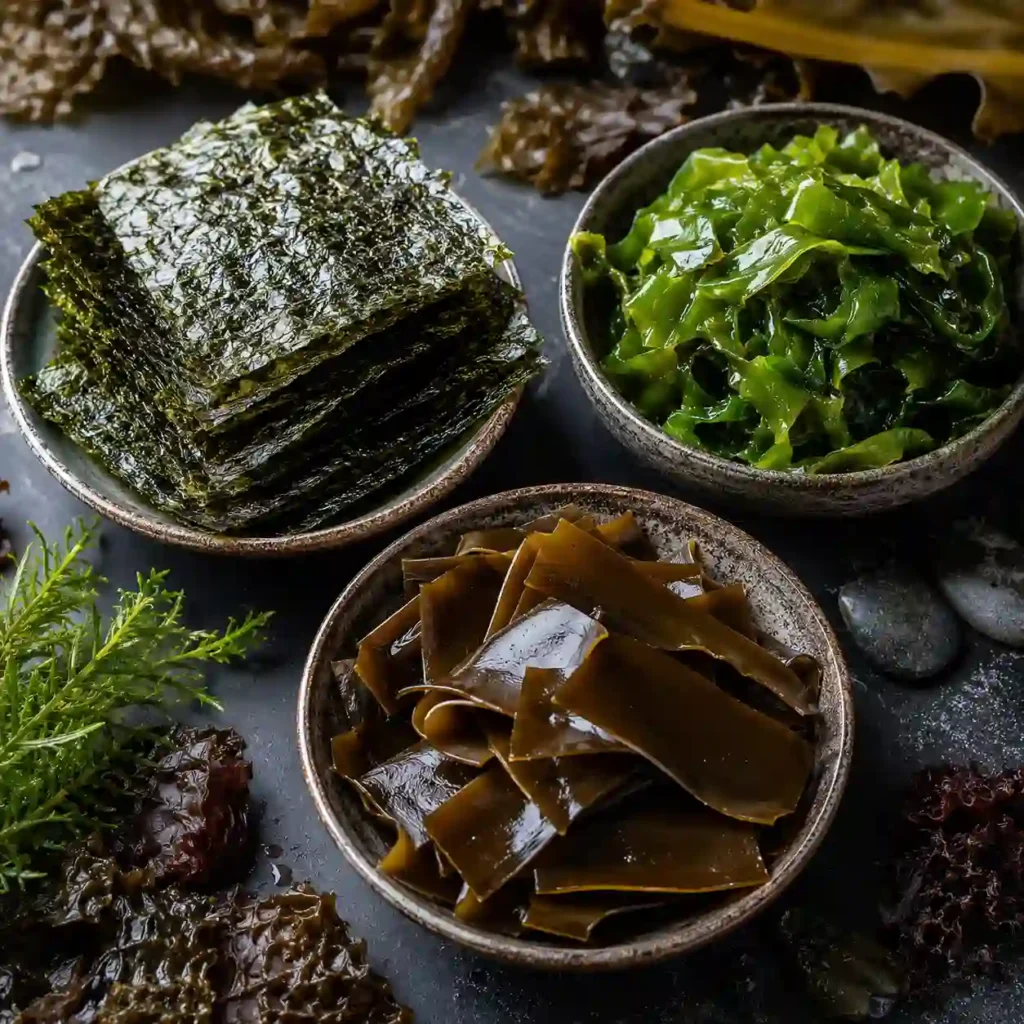
While all seaweeds are generally “healthy,” each variety serves a different functional purpose in a vegetarian or vegan diet. Understanding these differences allows you to “prescribe” seaweed to yourself based on your nutritional needs.
| Nutrient | Nori (Red Algae) | Wakame (Brown Algae) | Kelp/Kombu (Brown Algae) |
|---|---|---|---|
| Best For | Protein & Vitamin B12 | Magnesium & Heart Health | Maximum Iodine & Umami |
| Iodine Content | Moderate (~37mcg/g) | High (~139mcg/g) | Extremely High (~2500mcg/g) |
| Protein | Up to 50% Dry Weight | Low (around 1.5g/serving) | Moderate |
| Key Vitamin | High Vitamin A & B12 | High Folate (B9) | Vitamin K & Magnesium |
| Culinary Use | Sushi wraps, snacks | Miso soup, salads | Broths (Dashi), beans |
Is All Seaweed Edible? The Danger Zone
While most macroalgae in the ocean are non-toxic, there are specific “wild” varieties and environmental factors that can make seaweed dangerous for humans. Food Network smoothie tips.
Toxic Varieties to Avoid
If you are foraging or buying unverified products, avoid these species: Desmarestia (Acid Weed): These contain sulfuric acid in their cells to deter predators. Consuming them can cause severe chemical burns to the digestive tract. Blue-Green Algae (Cyanobacteria): Often found in freshwater lakes, these can produce neurotoxins that are lethal to humans and pets. Stick to marine (saltwater) algae.
Lyngbya Majuscula: This can cause severe “seaweed dermatitis” (skin rashes) upon contact and is toxic if ingested. Skin Cancer Foundation.
The “Bio-Accumulator” Risk
Seaweed acts like a sponge for the ocean. In industrialized areas, it can absorb: Inorganic Arsenic: Particularly high in Hijiki seaweed. Many health agencies (including the UK’s FSA) advise against eating Hijiki for this reason. Heavy Metals: Lead, Cadmium, and Mercury can be present if the seaweed is harvested near shipping lanes or chemical plants.
Microplastics: Emerging research in 2026 shows that seaweed can trap microplastic particles within its structure. Pro Tip: Always buy seaweed that is “Organically Certified” or “Tested for Heavy Metals” to ensure it was harvested from pristine waters.
Frequently Asked Questions
Is seaweed vegetarian?
Yes, seaweed is 100% vegetarian. It is a form of macroalgae that contains no animal flesh or by-products. Ayurvedic wellness resources.
Is seaweed vegan?
Yes, in its natural and plain dried forms, seaweed is vegan. Always check seasoned varieties for additives like honey or fish extract.
Can a vegetarian eat seaweed?
Absolutely. Not only can they eat it, but they should, as it provides essential Vitamin B12 and Iodine that are often difficult to find in a land-based vegetarian diet.
Is dried seaweed vegetarian?
Generally, yes. Plain or salted nori and kelp snacks are vegetarian. Avoid “Kimchi” or “Spicy Seafood” flavors unless they are specifically labeled vegan/vegetarian, as they may contain shrimp or fish powder.
Does seaweed count as a vegetable?
Culinary speaking, yes. It is referred to as a “marine vegetable.” Nutritionally, it fulfills the role of a leafy green vegetable in a balanced diet.
Is seaweed in sushi vegetarian?
The seaweed (nori) itself is vegetarian. To ensure a vegetarian sushi meal, choose rolls filled with cucumber, avocado, pickled radish, or tofu, and confirm the rice seasoning is fish-free. FAO food-based dietary guidelines.
Conclusion
Seaweed bridges the gap between the ocean’s vast mineral wealth and our dietary needs. For vegetarians and vegans, it offers a crucial source of iodine, iron, and umami flavor that is often missing from plant-based diets.
While it is technically a “living” form of algae rather than a traditional land plant, it fits perfectly within the ethical and health frameworks of meat-free living. Whether you are incorporating kelp into your smoothies, enjoying a carefully vetted seaweed salad, or snacking on roasted nori, you are consuming a sustainable superfood that supports both your body and the planet.
Just remember to check labels on processed products and enjoy this “marine vegetable” in moderation to keep your iodine levels in perfect balance. EFSA healthy diets overview.
Authoritative References
- Centers for Disease Control and Prevention. (2026). Fruits and vegetables for a healthy weight. https://www.cdc.gov/nutrition/fruits-vegetables/index.html
- WebMD. (2026). The benefits of vitamin C. https://www.webmd.com/diet/features/the-benefits-of-vitamin-c
- Food and Agriculture Organization of the United Nations. (2026). Food-based dietary guidelines. https://www.fao.org/nutrition/education/food-dietary-guidelines/home/en/
- Harvard Health Publishing. (2026). Truth about antioxidants. https://www.health.harvard.edu/healthbeat
- Harvard T.H. Chan School of Public Health. (2026). Vegetables and fruits. https://www.hsph.harvard.edu/nutritionsource/what-should-you-eat/vegetables-and-fruits/
- World Health Organization. (2026). Healthy diet fact sheet. https://www.who.int/health-topics/healthy-diet
- European Food Safety Authority. (2026). Healthy diet resources. https://www.efsa.europa.eu/en/topics/topic/healthy-diets
- National Library of Medicine. (2026). Antioxidants in health and disease. https://pmc.ncbi.nlm.nih.gov/
- Ayurveda.com. (2026). Amla Indian gooseberry guide. https://www.ayurveda.com/articles/amla-indian-gooseberry
- Eating a balanced diet. https://www.nhs.uk/live-well/eat-well/how-to-eat-a-balanced-diet/eating-a-balanced-diet/

