



Can You Freeze Brussels Sprouts? are one of the most versatile and nutritionally dense vegetables in the modern kitchen. Whether you’ve harvested a massive yield from your backyard or stumbled upon a bulk sale at the local farmers’ market, you likely find yourself asking: Can you freeze Brussels sprouts?
The short answer is a resounding yes. However, the success of your preservation depends entirely on the method you choose. FDA food safety guidelines.
Freezing is the most effective way to extend the life of these miniature cabbages, but there is significant confusion regarding the best approach. Should you freeze fresh Brussels sprouts straight from the bag? Do they need to be cooked first? Or is the labor-intensive process of blanching truly necessary?
In this 2026 guide, we will break down the science of vegetable preservation to ensure your sprouts remain crisp, vibrant, and flavorful for months to come. Roasted Brussels sprouts recipe.
We will explore the trade-offs of freezing raw versus cooked, the “no-blanch” shortcut, and the best packaging techniques for long-term storage. USDA food safety resources.
How Long Do Brussels Sprouts Last Fresh? (Before Freezing)
Before diving into the freezer, it is vital to understand the shelf life of the fresh product. Freezing is a “pause button,” not a “rewind button”; it cannot save a vegetable that has already begun to spoil. FSIS safe food handling guide.
Shelf Life in the Refrigerator
How long will Brussels sprouts last in the refrigerator? Generally, fresh, whole Brussels sprouts will stay in peak condition for 7 to 10 days. If they are still on the stalk, they may last up to two weeks. However, once you cut or shred them, the oxidation process accelerates,
and their quality begins to degrade within 48 to 72 hours. How to cook broccoli guide.
Signs Brussels Sprouts Have Gone Bad
Before you decide to freeze your supply, inspect it for these red flags: Yellowing Leaves: A sign of age and loss of Vitamin C. Black Spots or Mold: Indication of moisture trapped within the leaves. Soft or Slimy Texture: This suggests cellular breakdown and bacterial growth.
Strong Sulfur Smell: While sprouts have a natural scent, an overwhelming “cabbage” odor usually means they are past their prime. CDC food safety information.
If your sprouts show these signs, they should be composted rather than frozen. Freezing is the better option when you realize you won’t be able to consume your fresh supply within that 10-day window. Best broccoli recipes collection.
Can You Freeze Brussels Sprouts Raw or Uncooked?
One of the most frequent queries from meal preppers is: Can you freeze Brussels sprouts raw? While it is physically possible to toss a bag of raw sprouts into the freezer, it is rarely the recommended path for high-quality results. Harvard Health fiber guidance.
The Science of Raw Freezing
When you freeze raw Brussels sprouts, the enzymes within the vegetable remain active. Even at sub-zero temperatures, these enzymes slowly break down the cellular structure, leading to a loss of flavor, a dulling of color, and a significant change in texture.
When thawed, uncooked Brussels sprouts that were frozen raw often become mushy and develop a bitter, metallic aftertaste.
Trade-offs and Best Uses
There are instances where you might choose to freeze uncooked Brussels sprouts raw, despite the risks: Time Constraints: If the alternative is letting them rot in the fridge. Short-Term Storage: If you plan to use them within 4 to 6 weeks.
Specific Recipes: Raw-frozen sprouts work better in soups or stews, where their texture is less important than in a roast. Mayo Clinic vegetable nutrition.
Ultimately, when deciding whether to freeze Brussels sprouts raw or cooked, remember that raw freezing is a convenience choice, while blanching (partial cooking) is a quality choice. Metabolism and wellness tips.
Can You Freeze Brussels Sprouts Without Blanching?
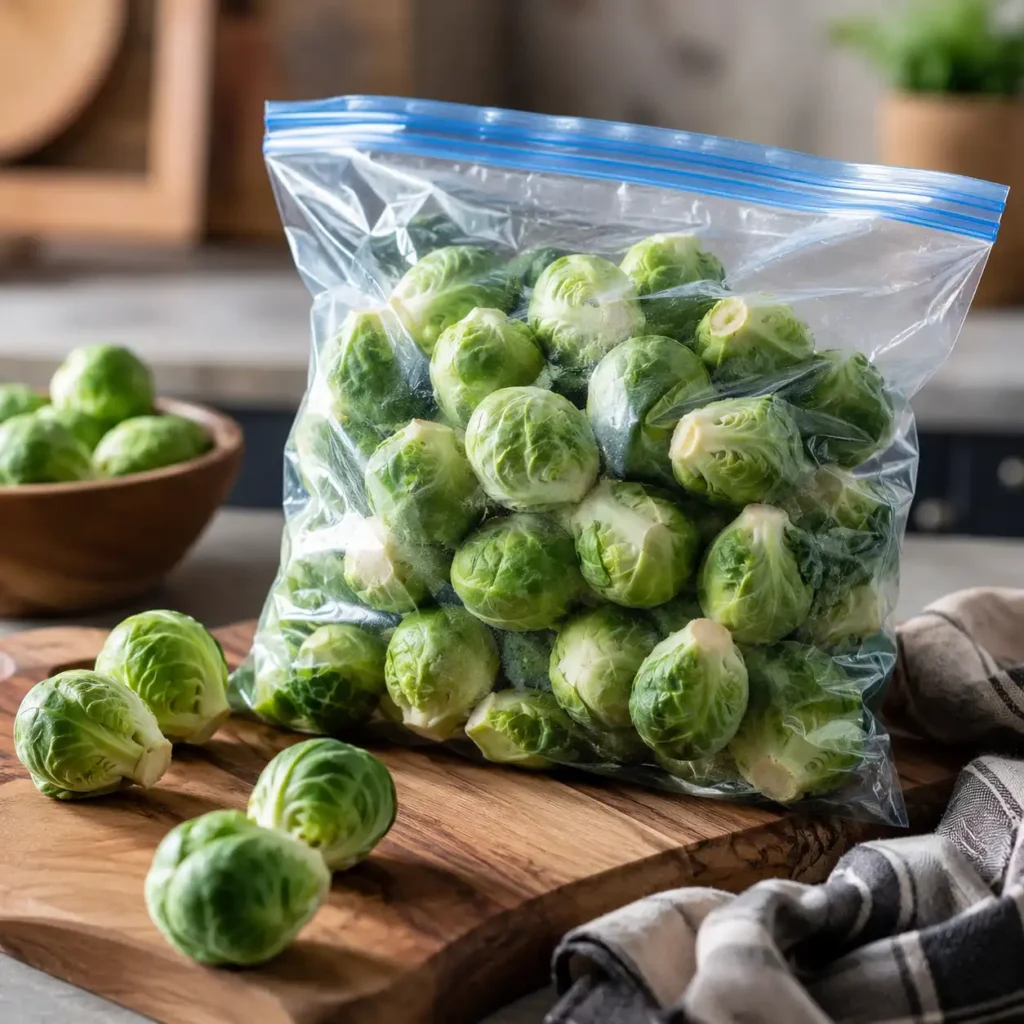
Skipping the boiling water is tempting. Search data shows a massive interest in freezing Brussels sprouts without blanching, as many home cooks find the extra step tedious. However, it is essential to know exactly what happens if you don’t blanch before freezing.
Why Blanching is the Gold Standard
Blanching—briefly boiling the vegetable and then plunging it into ice water—inactivates the ripening enzymes. Without this step, freezing sprouts without blanching allows those enzymes to continue their work. Healthy weight management strategies.
The Cons of Skipping Blanching
Texture Destruction: Without blanching, the ice crystals that form during freezing are larger, which ruptures the cell walls. This results in a “soggy” sprout upon reheating. Color Dulling: That vibrant emerald green will fade to a muddy brown over time.
Nutrient Loss: Blanching “sets” the vitamins; raw-frozen vegetables lose their nutritional value much faster in the freezer. NIH vitamin C research.
Pros and Survival Timeline
If you must freeze Brussels sprouts without blanching them, you can mitigate the damage by using them quickly. How long can you freeze Brussels sprouts without blanching? Quality usually remains acceptable for about 2 to 3 months. Beyond that, the enzymatic bitterness becomes too pronounced for most palates.
Best Vegetables to Freeze Without Blanching: While sprouts struggle without this step, other vegetables like onions, peppers, and corn (off the cob) tolerate “no-blanch” freezing much better because they have different enzymatic profiles and lower water-to-fiber ratios.
Can You Freeze Cooked Brussels Sprouts?
If you have leftovers from a holiday dinner, you may wonder: Can you freeze cooked Brussels sprouts? While it is possible, the results are quite different from freezing blanched sprouts. Skin Cancer Foundation.
Texture Changes After Cooking
Once a sprout is fully cooked (roasted, steamed, or sautéed), its cell walls have completely softened. When you freeze Brussels sprouts after cooking, the water inside the cells expands into ice and further breaks down that structure.
Upon thawing, cooked sprouts will be significantly softer—often too soft to be eaten as a crisp side dish again.
Best Uses for Frozen Cooked Sprouts
Don’t let them go to waste! Frozen cooked sprouts are excellent for: Pureeing into a “green” cream of vegetable soup. Mixing into a holiday hash with potatoes and onions. Adding to a vegetable pot pie or quiche. ACSM athlete nutrition.
Can You Freeze Roasted Brussels Sprouts?
Roasted sprouts are a fan favorite because of their charred, caramelized exterior. Can you freeze roasted Brussels sprouts and keep that crunch?
Unfortunately, that “crunch” is the first thing to go in the freezer. The caramelization becomes sticky and soft during the freezing and thawing process. To get the best results when reheating: Don’t microwave: This will make them rubbery.
Use the Air Fryer or Oven: Reheating at 400°F (200°C) for a few minutes can help “re-crisp” the edges, though they will never be quite as perfect as the day they were first roasted. Nature Reviews Microbiome.
Can You Freeze Brussels Sprouts With Bacon?
Brussels sprouts and bacon are a classic culinary pairing, often sautéed together with balsamic or maple syrup. If you have leftovers, you might ask: Can you freeze Brussel Sprouts with bacon?
Fat and Texture Considerations
While you can freeze them together, the fat in the bacon behaves differently from the vegetable fibers. Bacon fat can become “rancid” faster than the sprouts will spoil. If you plan to freeze Brussels sprouts after cooking with bacon, the shelf life is reduced to about 1 month for optimal flavor.
The bacon will also lose its crispness, becoming chewy once thawed. Academy of Nutrition guidelines.
Reheating Safety Tips
When reheating a sprout-and-bacon mixture, ensure it reaches an internal temperature of 165°F. Using a skillet is preferable to a microwave, as it helps render any lingering fat and prevents the dish from becoming a soggy mass. FDA fruit safety.
Are Brussels Sprouts Good After Being Frozen?
This is the ultimate question for any home cook: Are Brussels sprouts good after being frozen? If you are expecting the exact snap and crunch of a raw, farm-fresh sprout, you may be disappointed. However, for most cooked applications, frozen sprouts are excellent. NIH vitamin E factsheet.
Taste Comparison: Fresh vs. Frozen
A properly blanched and frozen sprout retains about 90% of its nutritional value and flavor. The main difference is the “structural integrity.” Frozen sprouts will always be slightly softer. This makes them less ideal for raw salads but perfect for:
Roasting: High heat can still brown the outside beautifully. Casseroles: They absorb sauces better than fresh sprouts. Air-Frying: The rapid air circulation helps combat the moisture added by freezing.
In many cases, frozen sprouts are actually better for those who prefer a more tender, less “bitter” vegetable, as the freezing process can actually mellow out some of the harsher sulfur compounds.
How to Preserve Brussels Sprouts Without Freezing
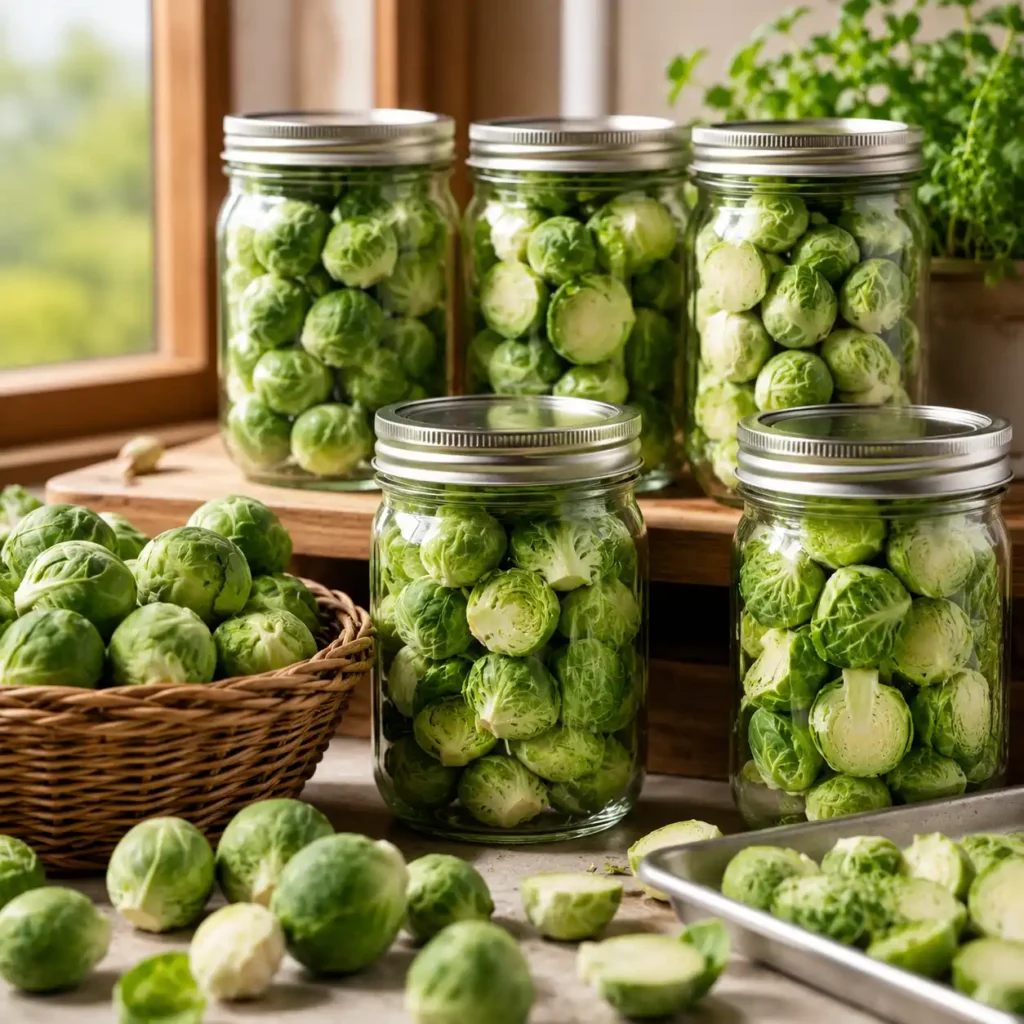
While the focus of this guide is on how to freeze Brussels sprouts, it is worth mentioning alternative preservation methods for those with limited freezer space.
Refrigeration and Root Cellars
If you only need to extend their life by a few weeks, keep them on the stalk in a cool, damp place (like a root cellar or a dedicated vegetable crisper). This is how to preserve Brussels sprouts in the short term without changing their texture.
Pickling and Fermenting
For a completely different flavor profile, you can pickle Brussels sprouts in a vinegar-brine or ferment them like sauerkraut. This creates a “Brussels Kimchi” or a spicy pickled snack that stays crunchy and lasts for months in the refrigerator.
Frequently Asked Questions
Can you freeze Brussels sprouts raw?
Yes, you can freeze Brussels sprouts raw, but they will likely become bitter and mushy within 2 months. For better texture and flavor, blanching is highly recommended. Integrative health vitamin C guide.
Can you freeze Brussels sprouts without blanching?
Yes, you can freeze Brussels sprouts without blanching them, but only for short-term storage. Without blanching, enzymes will degrade the color and taste much faster.
How long can you freeze Brussels sprouts?
Blanched Brussels sprouts last 12–14 months. Raw or unblanched sprouts should be eaten within 2–3 months. Cooked sprouts are best used within 1 month.
What happens if you don’t blanch before freezing?
If you skip blanching, the vegetable’s natural enzymes remain active. This causes the sprouts to turn brown, lose their vitamins, and develop a tough or rubbery texture.
Can you freeze cooked Brussels sprouts?
Yes, you can freeze cooked Brussels sprouts, but be aware that they will be much softer when reheated. They are best used in soups, stews, or mashed vegetable dishes.
Can you freeze Brussels sprouts from the garden?
Absolutely. Freezing Brussels sprouts from garden harvests is the best way to enjoy your crop all year. Just be sure to soak them in salt water first to remove any garden pests. Harvard Health antioxidants guide.
How long will Brussels sprouts last in the refrigerator?
Whole, fresh sprouts last 7–10 days in the fridge. Keeping them in a perforated plastic bag in the crisper drawer is the best way to maintain humidity.
Conclusion
When it comes to the question can you freeze Brussels sprouts, the evidence is clear: freezing is a fantastic way to prevent food waste and enjoy this seasonal vegetable year-round. However, for “top-notch” results, you shouldn’t take shortcuts.
The best way to freeze Brussels sprouts for long-term storage is to clean, trim, and blanch them for 3–5 minutes (depending on size). Following this with an ice bath and ensuring they are completely dry before placing them in a vacuum-sealed bag will guarantee that your sprouts stay green, sweet, and delicious for over a year. EFSA healthy diets overview.
Whether you are a gardener protecting your harvest or a meal-prepper stocking up, the effort you put into the preparation stage will pay off every time you pull a bag of perfect, vibrant sprouts from your freezer in the middle of winter.
Authoritative References
- Harvard T.H. Chan School of Public Health. (2026). Vegetables and fruits. https://www.hsph.harvard.edu/nutritionsource/what-should-you-eat/vegetables-and-fruits/
- WebMD. (2026). The benefits of vitamin C. https://www.webmd.com/diet/features/the-benefits-of-vitamin-c
- European Food Safety Authority. (2026). Healthy diet resources. https://www.efsa.europa.eu/en/topics/topic/healthy-diets
- Food and Agriculture Organization of the United Nations. (2026). Food-based dietary guidelines. https://www.fao.org/nutrition/education/food-dietary-guidelines/home/en/
- Harvard Health Publishing. (2026). Truth about antioxidants. https://www.health.harvard.edu/healthbeat
- Centers for Disease Control and Prevention. (2026). Fruits and vegetables for a healthy weight. https://www.cdc.gov/nutrition/fruits-vegetables/index.html
- National Library of Medicine. (2026). Antioxidants in health and disease. https://pmc.ncbi.nlm.nih.gov/
- World Health Organization. (2026). Healthy diet fact sheet. https://www.who.int/health-topics/healthy-diet
- Ayurveda.com. (2026). Amla Indian gooseberry guide. https://www.ayurveda.com/articles/amla-indian-gooseberry
- Eating a balanced diet. https://www.nhs.uk/live-well/eat-well/how-to-eat-a-balanced-diet/eating-a-balanced-diet/

