



In the landscape of modern wellness, few ingredients carry as much historical weight and scientific validation as Amla, Benefits of Amla Powder for Skin also known as the Indian Gooseberry (Phyllanthus emblica). While Ayurveda has heralded this translucent green fruit as a “divine medicine” for millennia, 2026 has seen a global resurgence in its popularity.
The amla powder benefits for health are no longer just traditional secrets; they are now the foundation of high-end skincare, metabolic supplements, and immune-boosting protocols.
Amla powder is created by drying fresh gooseberries and grinding them into a fine, nutrient-dense dust. Its rise to “superfood” status is driven by its staggering concentration of Vitamin C—far exceeding that of citrus fruits. Whether you are looking to revitalize a dull complexion, manage weight, or bolster your body’s internal defenses,
Amla offers a holistic solution. Many people adopt a “one amla a day” habit, but the powdered form provides a more concentrated, versatile, and convenient way to access these nutrients. Natural wellness ingredients.
Nutritional Profile of Amla Powder
To understand why the amla powder’s benefits for health are so profound, one must look at its chemical composition. Amla is not merely a fruit; it is a complex matrix of bioactive compounds that survive the drying process to provide targeted systemic support.
The Vitamin C Powerhouse
The most notable feature of Amla is its ascorbic acid content. Fresh Amla contains roughly 20 times the Vitamin C of an orange. In its powdered form, this concentration remains remarkably stable due to the presence of tannins that prevent the Vitamin C from oxidizing.
This nutrient is the primary driver behind collagen synthesis, making it indispensable for skin elasticity and joint health. Mayo Clinic on antioxidants.
Polyphenols and Flavonoids
Beyond Vitamin C, Amla is rich in polyphenols such as gallic acid and ellagic acid. These are potent antioxidants that neutralize free radicals—unstable molecules that damage cells and accelerate aging. For those following the one amla a day benefits philosophy,
These polyphenols provide a daily “shield” against environmental pollutants and UV-induced oxidative stress. Gut health and immunity.
Essential Fiber and Minerals
Amla powder is an excellent source of dietary fiber, which is essential for gut health and blood sugar regulation. It also contains vital minerals, including Calcium, which supports bone density and nerve signaling. Iron: Crucial for oxygen transport, which directly impacts skin glow and hair strength.
Phosphorus: Aids in energy production and DNA repair. Harvard Health fiber guidance.
By integrating Amla powder into your routine, you aren’t just taking a vitamin; you are consuming a whole-food complex that supports metabolism, skin texture, and cellular longevity. Women’s nutrition essentials.
Benefits of Amla Powder for Skin
The benefits of amla powder for skin are perhaps the most visible reason for its global demand. In 2026, the shift toward “inside-out beauty” has placed Amla at the forefront of the nutricosmetic movement.
Improves Skin Glow and Radiance
A “glow” is essentially a sign of high oxygenation and low inflammation. Amla powder purifies the blood and improves microcirculation. By delivering a surge of antioxidants to the dermis, it helps clear out metabolic waste, resulting in a naturally radiant and bright complexion.
American Heart Association nutrition.
Anti-Aging and Wrinkle Reduction
Aging is largely the process of collagen degradation. Because Amla is a direct catalyst for collagen production, it helps maintain the structural integrity of the skin. Regular internal consumption and external application help “plump” the skin from the inside,
reducing the appearance of fine lines and preventing the sagging often associated with environmental aging. NCI antioxidants fact sheet.
Acne and Pimple Control
Acne is often a combination of internal toxicity and external bacterial growth. Amla’s blood-purifying properties address the root cause of breakouts by helping the liver process toxins more efficiently. Topically, its astringent nature helps shrink enlarged pores and regulate sebum (oil) production,
making it a formidable ally against persistent acne. Metabolism and wellness tips.
Detoxification and Texture
The benefits of amla powder for skin and hair are deeply rooted in detoxification. Amla helps flush out toxins that can make the skin appear “muddy” or uneven. Over time, users notice a significant improvement in skin texture—the skin feels smoother, firmer,
and more resilient to the touch. NCCIH wellness resources.
Benefits of Amla Powder for Skin Whitening, Lightening & Pigmentation
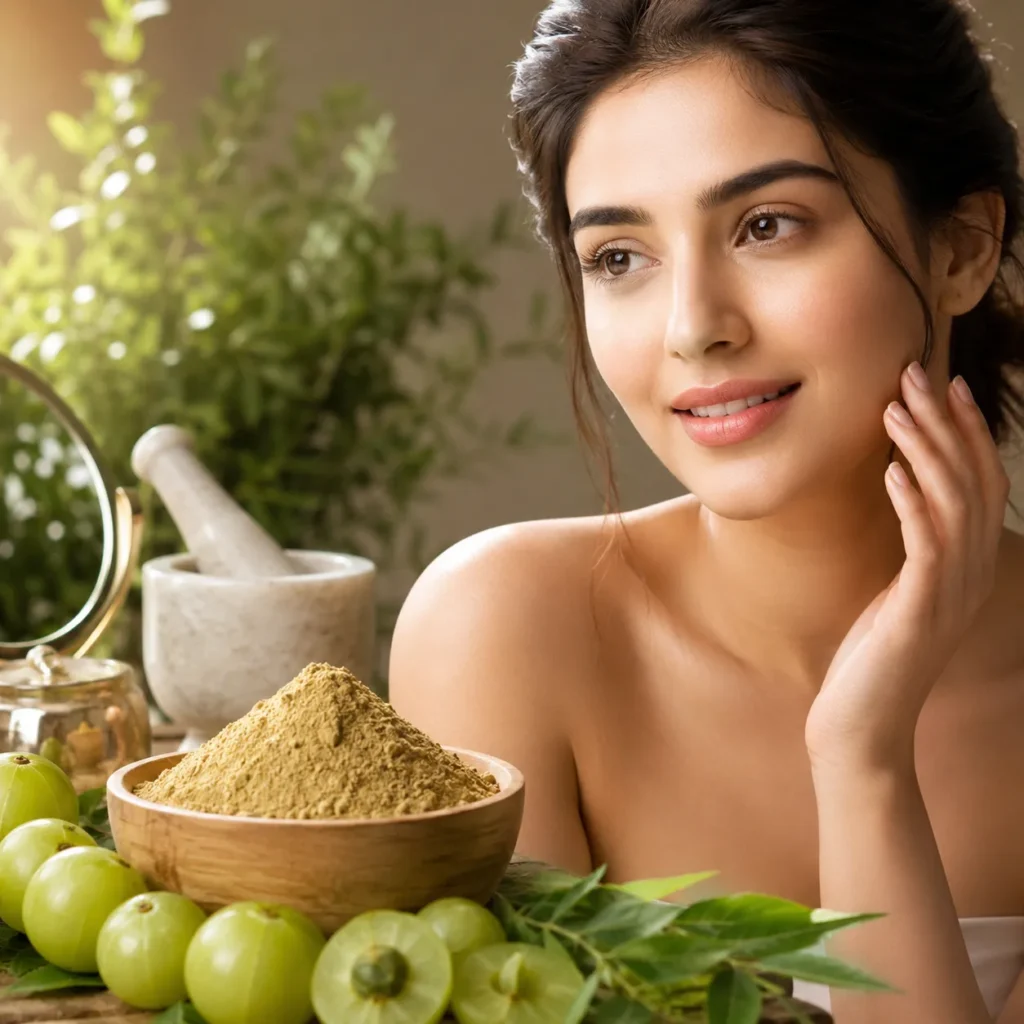
One of the most researched areas of Amla in beauty is its impact on melanin regulation. It is important to distinguish between “whitening” (an outdated and often harmful concept) and “lightening or brightening,” which refers to the removal of unwanted pigment
and the restoration of an even skin tone. WHO’s healthy diet guidelines.
Does Amla Powder Whiten Skin?
When people ask, “Does amla powder whiten skin?”, the scientific answer refers to its ability to inhibit tyrosinase—the enzyme responsible for melanin production. Amla does not bleach the skin; rather, it helps regulate melanin to prevent the formation of dark spots and patches.
EPA pesticide safety information.
Benefits of Amla Powder for Skin Lightening and Pigmentation
The benefits of amla powder for skin lightening are primarily driven by its high antioxidant load. Melanin Regulation: By inhibiting overactive melanocytes, Amla helps fade stubborn melasma and post-inflammatory hyperpigmentation (the dark marks left by acne).
UV Protection: While it is not a replacement for sunscreen, the polyphenols in Amla help protect the skin from “photo-pigmentation” caused by sun exposure. Understanding organic certification.
Fading Dark Spots: The benefits of amla powder for skin pigmentation manifest as a gradual fading of sunspots and age spots, leading to a more uniform and “luminous” skin tone. Healthy weight management.
Realistic Expectations
It is vital to maintain realistic expectations. Amla works with the body’s natural renewal cycle (which takes about 28 to 40 days). It provides a safe, botanical alternative to harsh chemical brighteners like hydroquinone, offering results that are sustainable and healthy.
Amla Powder for Skin: Before and After Results
The benefits of amla powder for skin before and after a consistent regimen are often striking. Unlike topical-only treatments, Amla creates a fundamental shift in the skin’s health. Week 2: Most users report a change in “internal brightness.” Digestion often improves during this time,
which is immediately reflected in reduced puffiness and clearer skin. ACAAI latex allergy guidance.
Week 4: Breakthroughs in acne and pigmentation become visible. The skin begins to feel firmer as collagen production ramps up. Week 8: This is the “Transformation Phase.” Fine lines appear softer, and dark patches are visibly lighter. The skin develops a resilient quality,
reacting less sensitively to environmental stressors.
The common thread in all successful Amla journeys is consistency. Because it is a natural product, the results build cumulatively over time.
Can We Use Amla Powder on Face Daily?
A frequent question among skincare enthusiasts is: Can we use amla powder on the face daily? While Amla is a natural powerhouse, its potency requires a strategic approach. Amla powder is naturally acidic due to its massive Vitamin C content.
For most skin types, using a pure Amla paste every single day may lead to over-exfoliation or a disrupted skin barrier. American Cancer Society nutrition.
However, there is a nuance to how to use amla powder for face safely: For Oily and Acne-Prone Skin: You can use a diluted Amla wash daily, but a thick mask should be limited to 3 times a week. For Dry or Sensitive Skin: Daily use is generally discouraged.
Stick to once or twice a week to avoid redness or a stinging sensation. The FDA produces safety tips.
The Patch Test Rule: Always perform a patch test on your jawline. If you experience persistent itching or bumps, reduce the frequency. In short, while you shouldn’t use a heavy Amla mask daily, a gentle, water-based Amla rinse can be a safe daily detox for those with resilient, oily skin.
Herbal wellness options.
How to Use Amla Powder for Face
To unlock the maximum benefits of amla powder for skin, topical application is key. Because the powder is versatile, you can customize your “Amla experience” based on your specific skin concerns.
Amla and Rose Water (The Instant Glow Pack)
This is the most popular method for those seeking immediate radiance. Rose water balances the acidity of the Amla while providing hydration. Method: Mix 1 tablespoon of Amla powder with enough rose water to form a smooth paste. Apply for 15 minutes and rinse with cool water.
This pack tightens pores and brightens a dull complexion instantly.
Amla and Honey (For Dry and Aging Skin)
If you are looking for the benefits of amla powder for skin without the drying effect, honey is the perfect partner. Honey is a humectant, meaning it locks moisture into the skin. Method: Combine 1 teaspoon of Amla powder with 2 teaspoons of raw honey.
This mask focuses on “plumping” the skin and reducing the appearance of fine lines. CDC fruits and vegetables for health.
Amla and Aloe Vera (The Acne Fighter)
For those struggling with active breakouts, Aloe Vera provides the cooling anti-inflammatory relief needed to balance Amla’s astringency. Method: Mix Amla powder with fresh Aloe Vera gel. This helps soothe the redness of pimples while the Vitamin C in Amla works to kill acne-causing bacteria.
Amla and Yogurt (For Pigmentation)
Yogurt contains lactic acid, which works synergistically with Amla to fade dark spots. Method: Mix 1 tablespoon of yogurt with 1 teaspoon of Amla powder. This is highly effective for addressing the benefits of amla powder for skin pigmentation and sun damage.
One Amla a Day Benefits & Daily Consumption
The phrase “one amla a day benefits” is common in Indian households for a reason. In 2026, nutritionists are categorizing Amla as an “adaptogen”—a substance that helps the body adapt to stress.
Long-Term Wellness Impact
Consuming the equivalent of one Amla (roughly 3-4 grams of powder) daily leads to: Immune Resilience: A constant high level of white blood cell activity. Ocular Health: Amla is rich in Vitamin A and carotene, which protect the retina.
Digestive Regularity: The fiber content ensures a clean colon, which is directly linked to skin clarity.
Compared to fresh Amla, the powder is often more effective for daily use because it is concentrated and available year-round, ensuring you never miss your daily dose of vitality. American Diabetes Association.
Amla Powder for Weight Loss
In the wellness landscape of 2026, amla powder benefits weight loss strategies by acting as a biological optimizer rather than a stimulant. Unlike “fat burners” that tax the nervous system, Amla works through metabolic efficiency and detoxification.
Metabolism Boost and Fat Oxidation
Amla is a potent stimulator of “Agni” (digestive fire). Enhancing the secretion of gastric juices, it ensures that the food you consume is converted into energy rather than stored as adipose tissue. Research into amla powder for weight loss suggests that its high concentration of polyphenols
can help regulate lipid metabolism, making it easier for the body to break down stubborn fat cells during exercise. Cleveland Clinic digestive health.
Appetite Control and Gut Health
The high fiber content in Amla powder creates a sense of satiety. When consumed with warm water, the fiber expands slightly in the stomach, helping to curb mid-day cravings and emotional eating. Furthermore, by ensuring regular bowel movements, Amla prevents the “sluggish” metabolism
associated with chronic constipation and toxin buildup. Food Network smoothie tips.
The Best Time to Take Amla for Weight Loss
For weight management, timing is everything. Consuming Amla powder 30 minutes before your largest meal of the day can help prevent the sharp insulin spikes that lead to fat storage. This ensures that your body stays in a “fat-burning” state for longer periods.
Amla Powder Benefits for Female Health
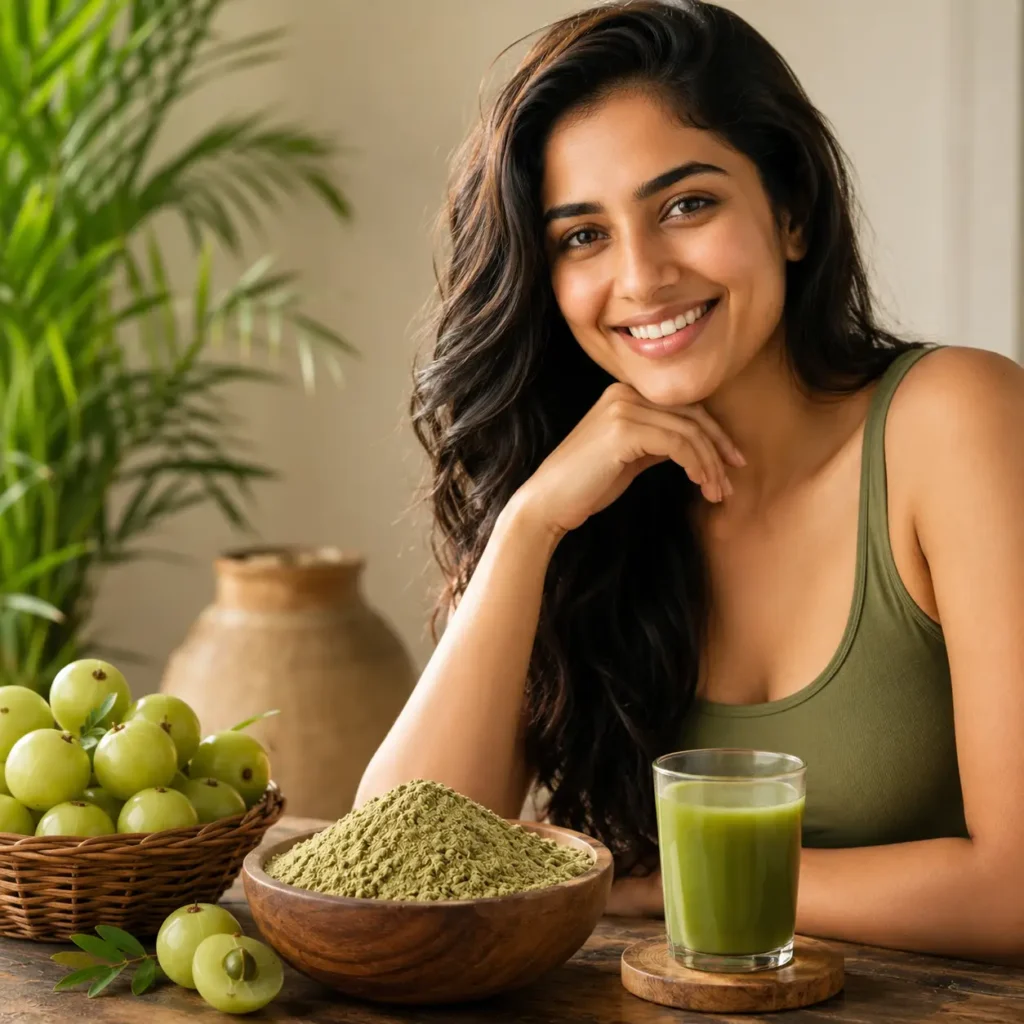
Beyond aesthetics, the amla powder benefits for female users extend into the realm of hormonal and reproductive wellness. Amla is considered a “Vayasthapana” (age-defying) herb that supports the unique physiological needs of women.
Hormonal Balance and PCOS Support
Polycystic Ovary Syndrome (PCOS) is often characterized by insulin resistance and hormonal fluctuations. Amla’s ability to stabilize blood sugar levels makes it an excellent dietary addition for managing PCOS symptoms. Reducing systemic inflammation, it can also help regulate the menstrual cycle
and reduce the severity of period-related breakouts. ACSM athlete nutrition.
Iron Absorption and Energy
Women are statistically more prone to iron-deficiency anemia. The massive Vitamin C content in Amla is the most effective natural way to increase the bioavailability of iron from plant-based foods. Regular consumption ensures higher energy levels, reduced fatigue,
and a vibrant, healthy complexion that isn’t marred by the paleness associated with low iron. Journal of Investigative Dermatology.
Amla Uses and Side Effects
To maintain a “top-notch” health routine, one must be aware of the full spectrum of amla uses and side effects. While Amla is “GRAS” (Generally Recognized as Safe), its potency means it must be handled with respect.
Internal vs. External Uses
Internal: Used as a dietary supplement for immunity, digestion, and weight loss. External: Used as a topical exfoliant, scalp treatment, and anti-aging face mask. NCI antioxidants fact sheet.
Possible Side Effects and Overconsumption
Acidity: Because Amla is highly acidic, consuming it in excess on an empty stomach may cause hyperacidity or a “burning” sensation for those with sensitive gastric linings. Dehydration: Amla is a natural diuretic. If you increase your Amla intake, you must also increase your water consumption
to prevent dry skin or constipation. Academy of Nutrition guidelines.
Blood Thinning: Amla has mild antiplatelet properties. While beneficial for heart health, it can be a concern for those already on blood-thinning medications. FDA fruit safety.
Who Should Avoid Amla?
Individuals with a history of kidney stones (due to the Vitamin C/oxalate relationship) or those scheduled for surgery within two weeks should consult a physician before using Amla powder. NIH vitamin E factsheet.
Is Amla Safe During Pregnancy?
Expectant mothers often ask: Is amla safe during pregnancy?
The Ayurvedic Perspective
Ayurveda views Amla as a “rejuvenator” that can help the mother maintain her energy levels and support the developing fetus’s immune system. Its cooling nature (Pitta-pacifying) can also help manage the “heat” and acidity often felt during the second and third trimesters.
Safe Dosage and Medical Consultation
While generally safe in food-based quantities, a concentrated “medicinal” dose of Amla powder should be discussed with an OB-GYN. The high Vitamin C content is beneficial, but during pregnancy, the body is highly sensitive to changes in detoxification rates.
Typically, a half-teaspoon daily is considered a safe threshold for most expectant mothers.
Frequently Asked Questions
Can I drink amla powder daily?
Yes, you can. In fact, for the amla powder benefits for health to manifest fully, consistency is vital. A daily dose of 3–5 grams is the standard recommendation for long-term wellness. USDA dietary guidelines.
Does amla powder whiten skin?
Amla powder does not “whiten” skin in the sense of bleaching. Instead, it lightens hyperpigmentation and regulates melanin production to restore your natural, even skin tone and radiance.
How to consume amla powder for the best results?
The best way to consume amla is by mixing 1/2 teaspoon in lukewarm water with a drop of honey, taken first thing in the morning on an empty stomach. Integrative health vitamin C guide.
Can we use amla powder on the face daily?
No. Due to its high acidity and exfoliating properties, daily use on the face can irritate the skin barrier. Limit face masks to 2–3 times per week.
Is amla powder safe for long-term use?
Yes, Amla is one of the few Ayurvedic herbs recommended for lifelong use as a Rasayana (rejuvenative tonic). Ayurvedic wellness resources.
Conclusion
As we have explored in this comprehensive guide, the benefits of amla powder for skin and health are comprehensive, covering everything from cellular anti-aging to metabolic fat loss. In 2026, as we move toward more transparent and botanical-based health practices,
Amla stands as a gold standard for “clean beauty” and “functional nutrition.” Nature Scientific Reports.
Whether you are seeking to fade stubborn pigmentation, manage your weight more effectively, or simply bolster your immune system, Amla powder offers a cost-effective, time-tested solution. By understanding the correct dosages and respecting its potency, you can harness the power of this ancient superfood
Authoritative References
- WebMD. (2026). The benefits of vitamin C. https://www.webmd.com/diet/features/the-benefits-of-vitamin-c
- Harvard T.H. Chan School of Public Health. (2026). Vegetables and fruits. https://www.hsph.harvard.edu/nutritionsource/what-should-you-eat/vegetables-and-fruits/
- Harvard Health Publishing. (2026). Truth about antioxidants. https://www.health.harvard.edu/healthbeat
- Food and Agriculture Organization of the United Nations. (2026). Food-based dietary guidelines. https://www.fao.org/nutrition/education/food-dietary-guidelines/home/en/
- European Food Safety Authority. (2026). Healthy diet resources. https://www.efsa.europa.eu/en/topics/topic/healthy-diets
- National Library of Medicine. (2026). Antioxidants in health and disease. https://pmc.ncbi.nlm.nih.gov/
- Centers for Disease Control and Prevention. (2026). Fruits and vegetables for a healthy weight. https://www.cdc.gov/nutrition/fruits-vegetables/index.html
- World Health Organization. (2026). Healthy diet fact sheet. https://www.who.int/health-topics/healthy-diet
- Eating a balanced diet. https://www.nhs.uk/live-well/eat-well/how-to-eat-a-balanced-diet/eating-a-balanced-diet/
- Ayurveda.com. (2026). Amla Indian gooseberry guide. https://www.ayurveda.com/articles/amla-indian-gooseberry

