



Amla powder, Benefits of Amla Powder for Hair derived from dried Indian gooseberries (Emblica officinalis), has been used for centuries in Ayurveda as one of the most powerful natural remedies for hair health. In the modern era of 2026, it is gaining unprecedented global attention as people move away from synthetic chemicals
in search of safe, effective, and natural solutions for hair loss, thinning hair, premature greying, and stagnant growth. Research on polyphenols and hair health.
From strengthening hair roots and encouraging robust regrowth to darkening hair naturally and restoring scalp equilibrium, the benefits of amla powder for hair are extensive and scientifically promising. This in-depth guide is designed to navigate the complexities of botanical hair care, answering critical questions such as can amla powder regrow hair.
How to use amla powder for hair growth, and whether drinking amla powder benefits hair growth. Explore ancient remedies for hair.
If you are struggling with hair thinning, excessive shedding, or dull hair—or simply want thicker, healthier locks—this comprehensive article will show you how amla powder can transform your hair naturally. NIH vitamin C research.
What Is Amla Powder and Why Is It Good for Hair?
Amla powder is created by harvesting fresh Indian gooseberries, drying them under controlled conditions to preserve their enzymatic activity, and grinding them into a fine, tan-colored powder. Unlike commercial hair products that often rely on silicones to create a temporary illusion of health,
Amla works at a fundamental biological level, nourishing the scalp and the hair’s internal structure. Natural wellness ingredients guide.
The Nutritional Powerhouse Behind the Powder
To understand what are the benefits of amla powder for hair, one must look at its dense molecular profile. Amla is unique because its nutrients are exceptionally bioavailable, meaning the scalp and body can absorb them easily. Extraordinary Vitamin C Levels: Amla contains significantly more Vitamin C than citrus fruits.
This is a vital precursor for collagen production, which builds the structural proteins of the hair. Mayo Clinic on antioxidants.
Antioxidant Defense: Rich in polyphenols, flavonoids, and tannins, amla powder fights oxidative stress caused by UV rays and pollution, which otherwise “ages” hair follicles. Essential Mineral Matrix: It provides iron (crucial for oxygenating hair roots) and calcium (which helps prevent hair breakage).
Amino Acid Profiles: The powder contains proteins that help strengthen the keratin structure of the hair shaft. Harvard Health nutrition guidance.
This combination of nutrients ensures that amla doesn’t just treat the surface; it revitalizes the hair from the follicle upward. Nutrition for women’s health.
Benefits of Amla Powder for Hair: An Overview
Before diving into the specific scientific pathways, it is helpful to visualize the total impact of this superfood. The hair benefits of amla powder are holistic, affecting the scalp, the root, and the visible strand.
A Snapshot of Key Advantages
Reduces Hair Fall: By inhibiting certain enzymes and strengthening the follicle grip. Stimulates Regrowth: It awakens dormant follicles to encourage new strands. Combats Hair Thinning: Increases the diameter of individual hair strands. Delays Greying: Supports natural melanin production to keep hair dark.
Scalp Health: Its anti-microbial properties clear dandruff and soothe inflammation. Internal Support: When consumed, it purifies the blood and provides the nutrients necessary for healthy hair cycles. Gut health and nutrition.
Each of these benefits is underpinned by specific biological actions, which we will explore in the following sections. NCCIH wellness resources.
Benefits of Amla Powder for Hair Growth
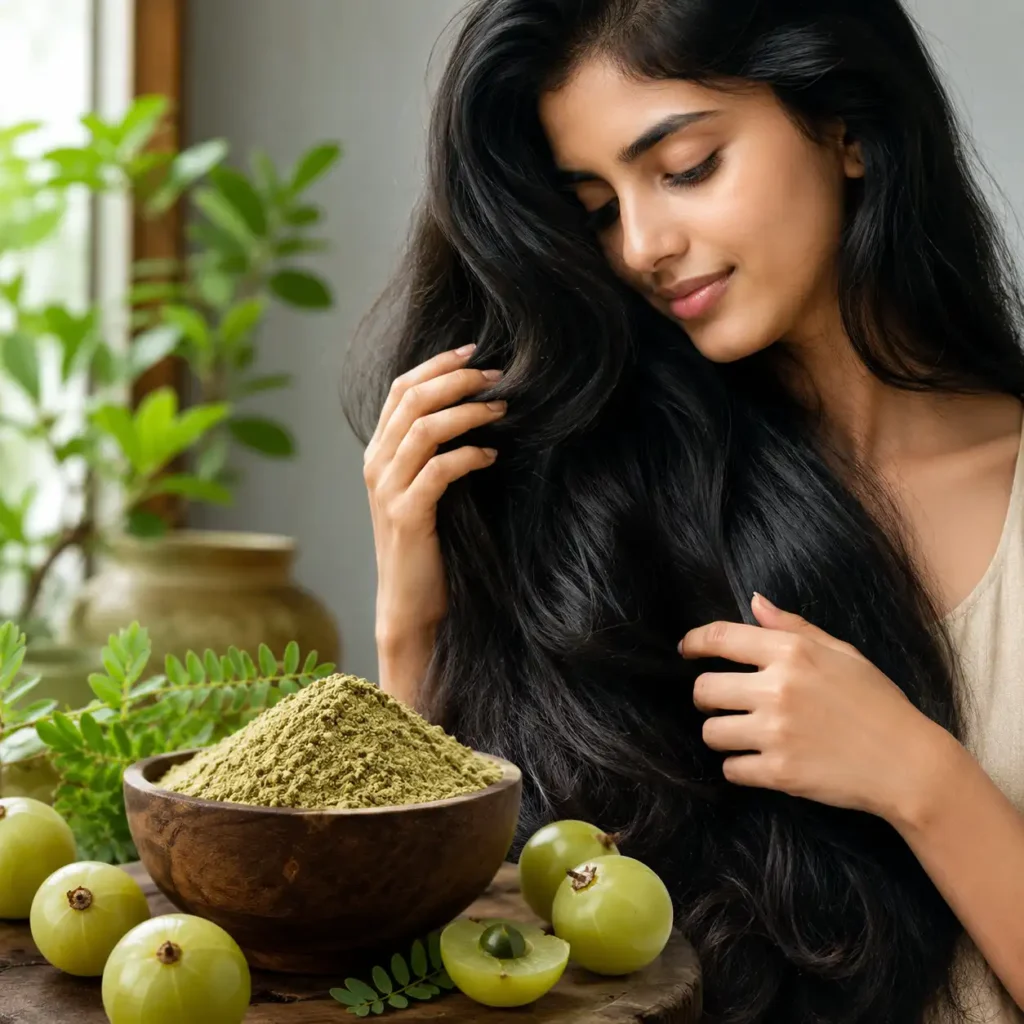
The most frequent inquiry regarding this botanical is: What are the benefits of amla powder for hair growth? The answer lies in its ability to modulate the hair’s natural growth cycle. FDA supplement safety guidelines.
How Amla Powder Stimulates New Growth
Hair growth is a complex process that relies on blood flow and protein synthesis. Amla intervenes in three distinct ways: Follicular Stimulation: Amla is a known vasodilator when applied to the scalp. It increases blood circulation, ensuring that the dermal papilla (the base of the hair follicle)
receives a steady stream of oxygen and nutrients. CDC food and supplement safety.
Collagen Synthesis: The high Vitamin C content is not just an antioxidant; it is a catalyst for collagen. Collagen is a key component of the hair’s structure; without it, hair becomes brittle and growth slows down. Anagen Phase Extension: Hair goes through three phases: Anagen (growth), Catagen (transition), and Telogen (resting).
Research suggests that the phytonutrients in amla help prolong the Anagen phase, allowing hair to grow for a longer period before it naturally sheds. American Heart Association nutrition.
Amla Powder for Hair Growth Before and After
While results vary based on individual health, a typical timeline for consistent use of amla powder usually follows this progression: 2–4 Weeks: Users typically notice a significant reduction in hair fall during brushing or washing. 6–8 Weeks: New “baby hairs” often become visible along the hairline and part lines.
3–4 Months: There is usually a noticeable increase in overall hair volume, thickness, and a healthier “bounce” to the hair. Metabolism and wellness tips.
Benefits of Amla Powder for Hair Loss
Hair loss is a multifaceted issue influenced by stress, hormones, and environmental factors. The benefits of amla powder for hair loss stem from its ability to address both the symptoms and the underlying scalp conditions. WHO’s healthy diet guidelines.
Mitigating the Causes of Shedding
Most hair loss is accelerated by scalp inflammation or follicle weakness. Amla powder addresses this by: Strengthening Follicle Anchor: It helps the hair root remain firmly embedded in the scalp, reducing “premature shedding.” Anti-Inflammatory Action: Scalp conditions like seborrheic dermatitis can cause hair to fall out.
Amla’s anti-inflammatory polyphenols soothe the scalp and create a healthy environment for hair to stay put. EPA pesticide safety information.
DHT Inhibition: Some studies suggest that amla may help inhibit 5-alpha reductase, the enzyme that converts testosterone into DHT (the hormone responsible for male and female pattern baldness). Unlike chemical “quick fixes,” amla powder supports the long-term health of the scalp,
making it a sustainable remedy for chronic hair fall. Healthy weight management strategies.
Amla Powder for Hair Thinning
Hair thinning is often more distressing than total loss because it happens gradually. It occurs when the hair follicle shrinks (miniaturization), producing finer, shorter, and more fragile strands. Understanding organic certification.
Restoring Density and Diameter
The benefits of amla powder for hair thinning focus on “bulking” the hair from the inside out. Because amla is rich in essential fatty acids, it penetrates the hair shaft to moisturize and strengthen it. Regular application helps: Improve Follicle Density: Encourages more hairs to grow per square inch of the scalp.
Increase Strand Thickness: Nutrients like carotene and iron help the body produce thicker, more resilient hair fibers. AAAAI allergy resources.
Prevent Miniaturization: By keeping the follicle nourished and the scalp supple, amla prevents the follicles from shrinking due to age or stress. Meal prep for better nutrition.
Can Amla Powder Regrow Hair?
One of the most pressing questions for anyone facing hair loss is: Can amla powder regrow hair? To answer this with scientific honesty, we must distinguish between “dormant” follicles and “dead” follicles. ACAAI latex allergy guidance.
Understanding Regrowth Potential
Amla powder is exceptionally effective at reviving dormant hair follicles. These are follicles that have stopped producing hair due to stress, nutritional deficiencies, or poor scalp circulation, but are still biologically alive. Nutritional Recovery: By providing a direct surge of Vitamin C and iron to the scalp,
Amla can “wake up” these follicles, leading to visible regrowth in areas that were previously thinning. Academy of Nutrition and Dietetics.
Limitations: It is important to note that amla cannot regrow hair in areas where the follicles have completely scarred over or died, such as in advanced stages of permanent alopecia. Herbal wellness options.
Why Regrowth Works Best with Amla
For those wondering how to use amla powder for hair regrowth, the secret lies in the blood flow. Amla increases the production of nitric oxide in the scalp, which dilates blood vessels. This ensures that the newly growing hair has a consistent “food supply,”
allowing baby hairs to transition into terminal (mature) hairs rather than falling out prematurely. American Cancer Society nutrition.
Will Amla Powder Darken Hair?
In 2026, the trend toward “slow beauty” has made natural color restoration highly popular. Many people ask: Will amla powder darken hair? The answer is yes, but it is a process of enhancement rather than a chemical dye. The FDA produces safety tips.
The Science of Melanin Protection
Amla does not contain pigments that stain the hair like a temporary dye. Instead, it works on the biological level to Boost Melanin Production: Amla is rich in antioxidants that protect the melanocytes (cells responsible for hair color) from oxidative stress. This helps maintain your natural shade.
Tannin Interaction: The natural tannins in amla have a slight darkening effect on the hair shaft over time, making the hair look richer, deeper, and glossier.
Color Restoration: For those whose hair has turned dull or “mousy” due to sun damage or hard water, amla restores the vibrant, dark tones that represent healthy hair. Wellness beverage insights.
How to Use Amla Powder for White Hair
Premature greying is often a sign of high Pitta (internal heat) or excessive oxidative stress. Using amla powder for white hair is a traditional Ayurvedic remedy that focuses on slowing down the greying process and blending existing greys.
The Anti-Greying Protocol
While Amla cannot turn a fully white hair back to black overnight, it can significantly delay the onset of new greys. Amla Hair Mask for White Hair Recipe: Ingredients: 2 tablespoons of Amla powder, 1 tablespoon of Brahmi powder (optional for brain/nerve cooling), and warm Coconut or Castor oil.
Application: Massage the paste into the roots specifically. The antioxidants neutralize the hydrogen peroxide buildup in the follicles—a leading cause of greying. CDC fruits and vegetables for health.
Frequency: Use this twice a week to help maintain the pigment cells and keep the hair looking youthful. Understanding metabolism.
Amla Powder Hair Mask Benefits
Applying Amla as a mask is the most intensive way to experience its benefits. A mask allows for “extended contact time,” giving the scalp’s pores enough time to absorb the phytonutrients. FAO dietary guidelines.
Key Amla Powder Hair Mask Benefits
Deep Cuticle Repair: Amla smooths the hair cuticle, which reduces frizz and makes hair feel like silk. Scalp Detoxification: It pulls out heavy metals and pollutants that accumulate from urban environments. Tensile Strength: Regular masks increase the “stretchiness” of the hair,
meaning it won’t snap when you tie it back or brush it. EFSA healthy diets resources.
Best Amla Hair Mask Variations for 2026
For Dry/Brittle Hair: Mix Amla powder with full-fat yogurt. The lactic acid cleanses the scalp while the fats moisturize the hair. For Dandruff/Itch: Mix Amla with Aloe Vera gel and a drop of Neem oil. This is a potent anti-fungal treatment.
For Maximum Volume: Mix Amla with Egg white or Fenugreek (Methi) powder to provide a protein boost that thickens the appearance of the hair instantly. Harvard T.H. Chan School of Nutrition.
Amla Powder on Blonde Hair: What You Should Know
While Amla is a miracle for dark hair, it requires caution for those with lighter locks.
Does Amla Powder Affect Blonde Hair?
Because of the high tannin content, amla can leave a subtle “ash” or cool-toned tint on very light blonde or platinum hair. It rarely turns hair orange, but it can make it look “dirty” or slightly darker if left on too long.
The Solution: If you have blonde hair, limit the mask time to 15 minutes and perform a strand test on an inconspicuous area first. Medical News Today health articles.
The Alternative: Use Amla-infused water (strained through a coffee filter) as a final rinse rather than a thick paste to minimize color deposit. WebMD nutrition resources.
How Do I Use Amla Powder on My Hair?
For the best results, the application technique is just as important as the ingredients. Many people ask, “How do I use amla powder on my hair?” only to find it messy. Following a structured step-by-step process ensures efficiency.
The Correct Application Method
Preparation: Mix the powder with warm (not boiling) water. Boiling water can denature the Vitamin C. Consistency: Aim for a “Greek yogurt” consistency so it doesn’t drip. Sectioning: Part your hair into four sections. Apply the paste primarily to the scalp using a tint brush or your fingers.
Massaging: Once applied, massage the scalp for 5 minutes to stimulate blood flow. Mayo Clinic healthy diet basics.
Rinsing: Rinse with lukewarm water. Avoid using a strong sulfate shampoo immediately after, as it can strip away the nutrients you just applied. Liver health and wellness.
Drinking Amla Powder for Hair Growth
While topical masks treat the existing hair strand, drinking amla powder benefits hair growth by nourishing the “live” part of the hair—the bulb—via the bloodstream. When you ingest Amla, the nutrients are processed by the liver and distributed to the hair follicles,
which are among the last organs to receive nutrients in the human body.
The Mechanism of Internal Nourishment
Purifying the Blood: In Ayurveda, hair loss is often linked to “Rakta Dosha” (impurities in the blood). Amla acts as a natural blood purifier, ensuring that the blood reaching your scalp is rich in oxygen and free from toxins. Collagen Production from Within: Vitamin C is a cofactor for two enzymes
(lysyl hydroxylase and prolyl hydroxylase) required for collagen synthesis. Drinking Amla ensures your body has a constant supply of these building blocks to construct a strong hair matrix.
Iron Bioavailability: Iron deficiency (anemia) is a leading cause of hair thinning in women. Amla’s Vitamin C increases the absorption of non-heme iron from your diet, making drinking amla powder with water a powerful anti-thinning strategy. American Diabetes Association.
Eating Amla Benefits for Hair vs. Amla Juice
A common debate in the wellness community is whether it is better to eat the whole fruit, use the powder, or drink the juice. Each has its specific advantages for hair health.
The Whole Food Advantage
Eating amla benefits hair primarily through the inclusion of dietary fiber. Fiber helps regulate blood sugar; high insulin levels are closely linked to “androgenetic alopecia” (hormonal hair loss). By eating Amla, you prevent insulin spikes that can lead to follicle miniaturization.
Amla Juice for Rapid Absorption
Does amla juice regrow hair? While “regrow” is a strong word, Amla juice provides the fastest delivery of antioxidants. Because it is a liquid, the phytonutrients enter the lymphatic system quickly. Many users find that a daily shot of Amla juice, combined with a teaspoon of Amla powder, in their smoothies
provides the most rapid “Before and After” transformation in hair shine and scalp clarity. Food Network smoothie tips.
Amla Powder for Hair Growth Before and After: The Reality
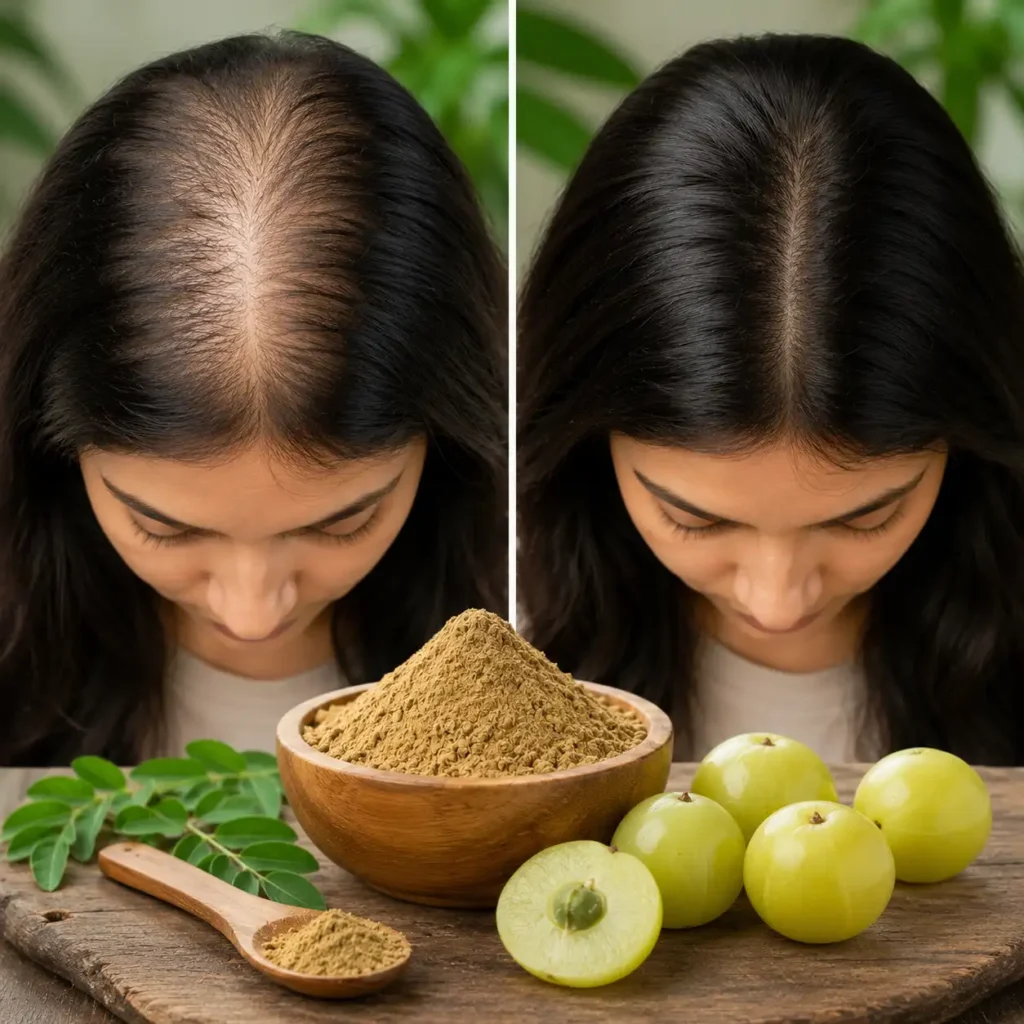
To maintain the “top-notch” authority of this guide, we must set realistic expectations. Hair typically grows only half an inch per month, so any “Before and After” claims of instant growth are misleading.
The 180-Day Transformation Timeline
Day 1–30: The “Stabilization Phase.” You will notice significantly less hair in your shower drain. The scalp starts to feel less oily or itchy. Day 30–90: The “Textural Phase.” The existing hair becomes glossier. The “frizz” caused by nutrient deficiency begins to smooth out
as the hair shaft retains more moisture. Sleep Foundation nutrition.
Day 90–180: The “Density Phase.” This is when you see the results of amla powder for hair regrowth. Small “vellus” hairs transition into thicker “terminal” hairs, filling in thinning spots around the temples and crown. ACSM athlete nutrition.
Side Effects of Amla Powder on Hair
Even the most natural remedies require caution. While the side effects of amla powder on hair are rare, they are usually a result of improper use or individual sensitivity.
Identifying and Preventing Adverse Reactions
Over-Drying: Amla is an astringent. If you have naturally dry or curly hair (Type 3 or 4), using a water-only Amla mask can strip away natural oils. Solution: Always mix Amla powder with a carrier oil like Coconut, Argan, or Olive oil. Scalp Irritation: In rare cases, the high acidity of Vitamin C
can cause a tingling or itching sensation. Solution: Perform a patch test behind the ear 24 hours before a full application.
Color Shifting: As discussed, light-colored hair may take on a darker or cooler tint. Solution: Reduce the “sit time” to under 15 minutes for blonde or silver hair. NCI antioxidants fact sheet.
Frequently Asked Questions
Can amla powder regrow hair on a bald spot?
If the bald spot is due to recent thinning or “dormant” follicles, yes. If the area has been completely smooth for many years (indicating the follicle is dead), Amla can improve the skin health of the area, but is unlikely to sprout new hair.
How often should you use amla powder on your hair?
For most people, once a week is the “sweet spot.” If you are dealing with severe dandruff or acute hair fall, you can increase this to twice a week for the first month, then revert to once a week for maintenance.
What are the benefits of amla powder for hair loss caused by stress?
Amla is an adaptogen. It helps lower cortisol levels when consumed and reduces the “oxidative hit” your follicles take during stressful periods, preventing the hair from entering the “Telogen” (shedding) phase prematurely.
Will amla powder darken hair permanently?
It darkens hair by improving health and melanin retention. It is not a permanent chemical dye; if you stop using it, your hair will eventually return to its natural state as new hair grows in.
Conclusion
The verdict for 2026 is clear: the benefits of amla powder for hair are not just a relic of ancient Ayurveda; they are a validated, biological solution to modern hair woes. By addressing the root causes of hair loss—inflammation, oxidative stress, and nutrient deficiency—Amla provides a comprehensive alternative too expensive and often harsh chemical treatments.
Whether you choose to apply a cooling Amla mask on a Sunday afternoon or start your morning by drinking amla powder with water, the key to success is consistency. Hair care is a marathon, not a sprint. If you commit to the process for 3 to 6 months, you will likely join the millions of people
who have successfully transformed their hair thinning into hair thickening using this “divine” Indian gooseberry. UNEP sustainable food systems.
Authoritative References
- Mayo Clinic. (2026). Healthy diet basics. https://www.mayoclinic.org/healthy-lifestyle/nutrition-and-healthy-eating/basics/healthy-diets/hlv-20049477
- Healthline. (2026). Kiwi nutrition facts. https://www.healthline.com/nutrition/foods/kiwi
- WebMD. (2026). Health benefits of kiwi. https://www.webmd.com/diet/health-benefits-kiwi
- Medical News Today. (2026). Kiwi health benefits. https://www.medicalnewstoday.com/articles/283128
- British Nutrition Foundation. (2026). 5-a-day guidance. https://www.nutrition.org.uk/healthyliving/basics/5aday/fruit-and-vegetables/
- Harvard T.H. Chan School of Public Health. (2026). Vegetables and fruits. https://www.hsph.harvard.edu/nutritionsource/what-should-you-eat/vegetables-and-fruits/
- Food and Agriculture Organization of the United Nations. (2026). Food-based dietary guidelines. https://www.fao.org/nutrition/education/food-dietary-guidelines/home/en/
- European Food Safety Authority. (2026). Healthy diet resources. https://www.efsa.europa.eu/en/topics/topic/healthy-diets
- National Library of Medicine. (2026). Antioxidants in health and disease. https://pmc.ncbi.nlm.nih.gov/
- Centers for Disease Control and Prevention. (2026). Fruits and vegetables for a healthy weight. https://www.cdc.gov/nutrition/fruits-vegetables/index.html

