



In the world of functional superfoods, few substances carry as much historical weight and scientific backing as the benefits of amla powder. Derived from the Indian gooseberry (Phyllanthus emblica), amla has been the cornerstone of Ayurvedic medicine for over 3,000 years.
Today, as global wellness trends shift toward whole-food nutrition and ancient herbal wisdom, millions of people are asking, “What are the benefits of amla powder, and how can it be integrated into a modern lifestyle?”
Amla powder is created by drying the small, greenish-yellow fruits of the Amla tree and grinding them into a fine, tan-colored dust. While the fresh fruit is known for its intense bitterness and sharp acidity, the powdered form offers a more versatile way to access its legendary nutrient density.
Whether you are investigating what amla powder is good for in terms of hair growth or looking for the health benefits of amla powder to bolster your immune system, this guide provides the definitive answers.
The resurgence of amla in 2026 is largely due to its status as one of the most concentrated sources of vitamin C on the planet. Unlike synthetic supplements, the nutrients in Amla are bound to natural tannins, which prevent them from degrading quickly.
In the following sections, we will explore the benefits of amla powder for internal health, topical beauty, and long-term vitality, establishing why this “divine fruit” remains an essential tool for holistic healing. Learn more about herbal superfoods like cloves.
Nutritional Profile of Amla Powder
To understand what amla powder does for the human body, one must first look at its chemical composition. Amla is often referred to as a “powerhouse,” not because of its caloric value but because of its staggering concentration of micronutrients and bioactive compounds.
Vitamin C: The Ascorbic Acid Giant
The most famous attribute of Amla is its Vitamin C content. Gram for gram, Amla powder contains significantly more Vitamin C than oranges or lemons. In its dried, powdered state, the concentration becomes even more potent.
This high level of vitamin C is crucial for the benefits of amla powder internally, as it serves as the primary fuel for collagen production and cellular repair. National Institutes of Health: Vitamin C Fact Sheet.
Polyphenols and Flavonoids
Beyond vitamins, Amla is rich in polyphenols, specifically gallic acid and ellagic acid. These compounds act as biological shields. When considering the benefits of amla powder for health, these antioxidants are the stars, as they neutralize free radicals that cause oxidative stress.
The presence of tannins—emblicanin A and B—is particularly unique to amla, as they stabilize the vitamin C, ensuring it remains bioavailable even after the fruit has been processed into powder. Research on polyphenols and antioxidant activity.
Fiber and Minerals
Amla powder is an excellent source of dietary fiber, which supports the gastrointestinal tract. It also provides essential minerals, including:
Calcium: For bone density and nerve signaling.
Iron: For oxygen transport in the blood.
Phosphorus: For DNA repair and energy storage.
For more on gut-supportive foods, explore Is Yogurt Good for Gut Health?.
Powder vs. Fresh Amla: The Nutritional Shift
While fresh Amla is hydrating, the powder form is a concentrated version of the fruit’s medicinal properties. During the drying process, water is removed, leaving behind a dense matrix of nutrients.
This makes a single teaspoon of Amla powder equivalent to eating multiple fresh fruits, providing a convenient and potent way to experience the benefits of Amla powder daily. Ayurvedic perspectives on Amla processing.
What Are the Health Benefits of Amla Powder?
When people ask, “What are the health benefits of amla powder?” they are usually looking for a solution to a specific ailment. However, the true power of Amla lies in its systemic impact. It does not just treat one symptom; it optimizes multiple biological pathways.
Systematic Immunity Support
In an era where immune resilience is a top priority, Amla powder stands out as a natural modulator. The synergy between vitamin C and polyphenols enhances the activity of natural killer (NK) cells and macrophages.
Regular intake helps the body respond more efficiently to viral and bacterial threats, making it one of the most searched benefits of amla powder for health. WHO: Nutrition and Immune Function.
Optimization of Digestive Health
In Ayurveda, amla is known for its “deepana” (appetite-stimulating) and “pachana” (digestive) properties. The high fiber content acts as a mild laxative, helping to regulate bowel movements and prevent constipation.
Furthermore, Amla helps cool the digestive tract, reducing the acidity and inflammation associated with gastritis and peptic ulcers. This is a key reason why the benefits of eating amla powder often include relief from chronic bloating and indigestion.
Discover more digestive wellness tips at Foods That Burn Belly Fat Fast.
Blood Sugar Regulation and Metabolic Health
Emerging research in 2026 continues to validate Amla’s role in managing glucose levels. The chromium present in Amla powder has a therapeutic effect on the cells that produce insulin.
By improving insulin sensitivity, Amla helps prevent the sharp spikes in blood sugar that lead to metabolic fatigue. This makes it a valuable dietary addition for those monitoring their glycemic index. American Diabetes Association: Blood Sugar Management.
Heart Health and Lipid Management
Amla powder contributes to cardiovascular wellness by helping to lower “bad” LDL cholesterol and triglycerides while supporting “good” HDL cholesterol. The antioxidants prevent the oxidation of cholesterol in the arteries, which is a primary cause of plaque buildup.
This cardiovascular protection is one of the most significant benefits of amla powder internally. American Heart Association: Cholesterol Guidelines.
Anti-Inflammatory and Anti-Aging Effects
Chronic inflammation is the root of most modern diseases, from arthritis to heart disease. The phytonutrients in Amla powder inhibit the pro-inflammatory cytokines in the body.
Simultaneously, the high antioxidant load protects the telomeres in your DNA, slowing down the biological aging process. When users ask what amla powder is good for, the answer often points to this total-body rejuvenation that manifests as increased energy and youthful skin.
Explore anti-aging nutrition strategies at Chia Seeds Benefits for Females.
Benefits of Drinking Amla Powder (With Water, Honey & Daily Use)
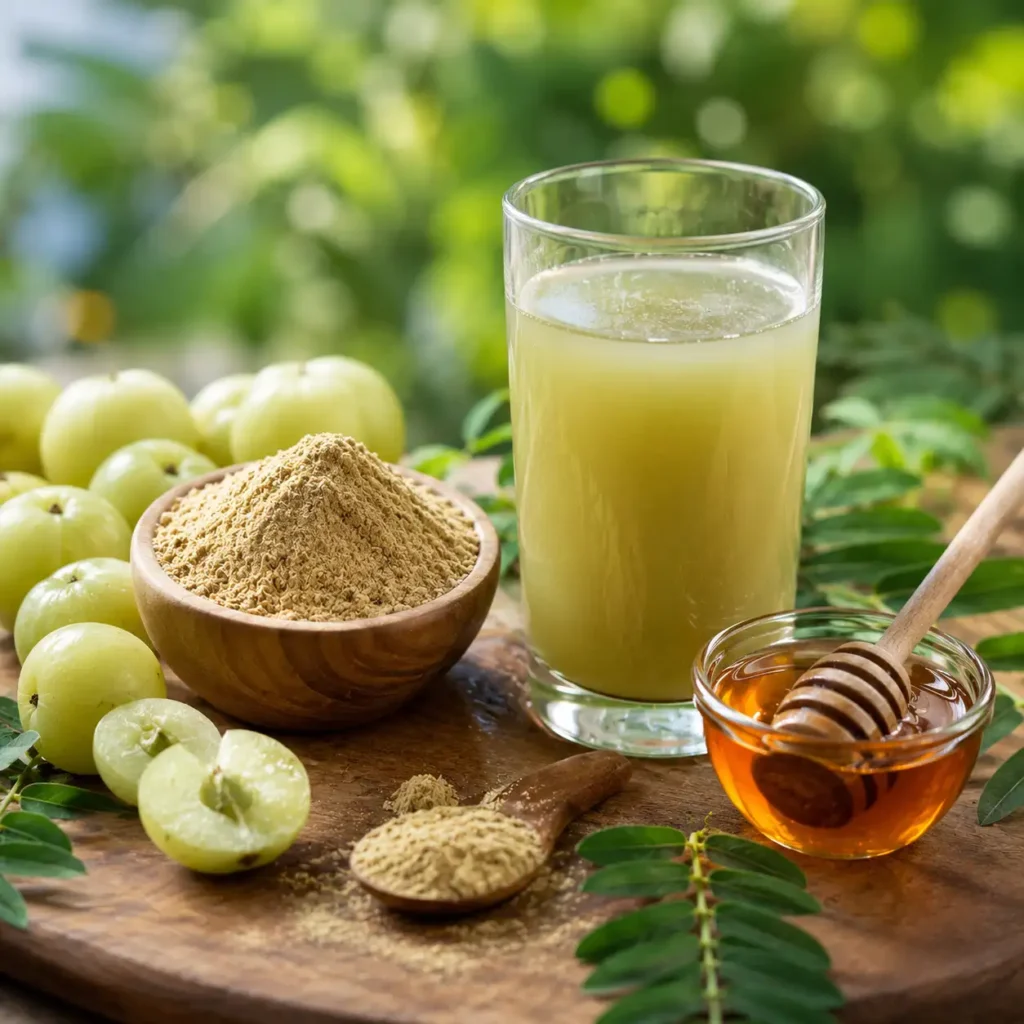
The method of consumption is just as important as the substance itself. Many people prefer the benefits of drinking amla powder because liquids are absorbed more rapidly by the body.
Benefits of Amla Powder with Water
The simplest way to consume this superfood is by mixing it with warm water. Drinking this mixture, especially in the morning, helps flush out toxins from the liver and kidneys.
The benefits of drinking amla powder with water include immediate hydration combined with a metabolic “kickstart” that prepares the stomach for the day’s meals. Harvard Health: The Importance of Hydration.
Benefits of Amla Powder and Honey
Because Amla powder has a very strong, astringent taste, many people choose to mix it with raw honey. This is not just for flavor; it is a traditional Ayurvedic pairing.
The benefits of amla powder with honey are particularly effective for respiratory health. Honey acts as a carrier (anupana) that helps the amla reach the deeper tissues of the respiratory tract, providing relief from chronic coughs and seasonal allergies.
For natural remedies, see Is Chamomile Tea Healthy?.
Daily Use and Consistency
Can I drink amla powder daily? Yes, and in fact, consistency is the key to seeing results. Unlike pharmaceutical interventions, the benefits of amla powder drink formulations build up over time.
Daily use ensures that your antioxidant levels remain stable, providing a constant defense against environmental toxins. NCCIH: Ayurvedic Medicine Overview.
Benefits of Amla Powder on an Empty Stomach
In the practice of Ayurveda, timing is as vital as the remedy itself. Consuming Amla in the early morning serves as a biological “reset” for the system. When you explore the benefits of amla powder on an empty stomach, you are looking at a process of deep detoxification.
Without the presence of other foods to compete for digestion, the bioactive tannins and vitamin C are absorbed directly into the bloodstream with maximum efficiency.
One of the primary benefits of 1 teaspoon of amla powder taken upon waking is the activation of digestive enzymes. It stimulates the secretion of gastric juices, which ensures that the food you consume later in the day is broken down more effectively.
Furthermore, this morning ritual acts as a natural diuretic, aiding the kidneys in flushing out accumulated uric acid and toxins. For those seeking a natural way to increase nutrient absorption from their entire diet, starting the day with Amla is an unbeatable strategy.
Learn about metabolism optimization at How Your Body Burns Fat.
Is Amla Powder Good for Weight Loss & Liver Health?
The question “Is Amla powder good for weight loss?” is one of the most frequent queries in modern wellness forums. The answer lies in Amla’s ability to improve metabolic rate.
Amla powder does not “burn” fat in a magical sense; rather, it optimizes the body’s ability to oxidize fatty acids. By improving insulin sensitivity, it prevents the body from storing excess glucose as fat, making it an essential tool for weight management.
Liver Detoxification and Protection
Equally important is the question, “Is Amla powder good for liver health?” The liver is the body’s primary filtration system, and it is often overtaxed by modern diets.
Amla powder is rich in phytochemicals like quercetin and gallic acid, which have been shown to protect the liver from oxidative damage. It supports the production of glutathione, the body’s “master antioxidant,” which is crucial for neutralizing toxins and heavy metals.
By supporting liver function, Amla indirectly aids weight loss, as a healthy liver is essential for efficient fat metabolism.
Benefits of Amla Powder for Hair
For many, the benefits of amla powder for hair are the primary reason for discovering this fruit. Amla is often called the “fruit for hair” because it addresses the health of the follicle from both the inside and the outside.
Prevention of Hair Fall and Promotion of Growth
The hair benefits of amla powder start at the root. Amla is a potent inhibitor of 5-alpha reductase, the enzyme responsible for converting testosterone into DHT (dihydrotestosterone), which is a leading cause of hair thinning and loss.
By blocking this pathway and increasing circulation to the scalp through its high vitamin C content, amla strengthens the hair follicles and encourages new growth. American Academy of Dermatology: Hair Loss Causes.
For natural hair solutions, visit Ancient Root for Hair Regrowth.
Reduction of Dandruff and Scalp Infections
Amla possesses strong antifungal and antibacterial properties. When applied topically or consumed regularly, the benefits of amla powder on hair include a clearer, healthier scalp.
It helps regulate sebum production, preventing the oily environment where dandruff-causing fungi thrive. Healthline: Understanding Dandruff.
Delaying Premature Greying
One of the most legendary benefits of amla powder for hair is its ability to preserve natural pigment. Greying is often a result of oxidative stress and a lack of vitamin B12 and copper.
Amla’s massive antioxidant load fights the free radicals that damage the melanocytes (pigment-producing cells) in the hair follicles, helping to maintain your natural color for longer. WebMD: Why Hair Turns Gray.
The Amla and Coconut Oil Synergy
For an intensive treatment, the benefits of amla powder and coconut oil for hair are unparalleled. Coconut oil penetrates the hair shaft to prevent protein loss, while Amla provides the nutrients needed for strength.
Mixing one teaspoon of Amla powder with two tablespoons of warm coconut oil creates a potent hair mask that repairs split ends and adds a natural, healthy luster. Research on Coconut Oil for Hair Health.
Benefits of Amla Powder for Skin & Face
The beauty industry has long recognized the benefits of amla powder for skin, often incorporating its extracts into high-end serums. However, using the pure powder offers a more concentrated and natural alternative.
Acne Control and Pore Cleansing
The astringent nature of Amla makes it a powerful remedy for acne-prone skin. The benefits of amla powder for the face include its ability to shrink enlarged pores and regulate the skin’s natural oils.
Its anti-bacterial properties help kill acne-causing bacteria, while its anti-inflammatory effects reduce the redness and swelling associated with breakouts. AAD: Acne Skincare Tips.
Skin Brightening and Collagen Production
Vitamin C is the foundational building block of collagen. Without it, the skin loses its elasticity and begins to sag. Regular use of Amla, either through diet or face packs, stimulates collagen synthesis, leading to firmer, more youthful skin.
Furthermore, the benefits of amla for skin include the fading of hyperpigmentation and dark spots, resulting in a more even and radiant complexion. Skin Cancer Foundation: Sun Protection.
Anti-Aging and Environmental Protection
The polyphenols in Amla powder act as an internal sunscreen, protecting the skin from UV-induced damage and the harmful effects of pollution. By neutralizing free radicals, Amla prevents the premature formation of fine lines and wrinkles, ensuring that your skin remains resilient against the elements.
Antioxidants and Skin Aging Research.
Amla Powder Benefits for Women & Men
While Amla is a general tonic, there are gender-specific benefits of Amla powder that are particularly noteworthy in clinical Ayurveda.
Amla Powder Benefits for Female Health
For women, Amla acts as a hormonal balancer. The Amla powder benefits for female users often center on menstrual health. Its high iron content helps replenish blood lost during menstruation, preventing anemia and fatigue.
Additionally, amla is known to support the health of the reproductive system and can be a helpful dietary addition for women managing symptoms of PCOS (Polycystic Ovary Syndrome) due to its insulin-regulating properties. Office on Women’s Health: PCOS Overview.
Amla Powder Benefits for Male Health
For men, the Amla powder benefits for male users focus on vitality and stamina. Amla is considered a “Vajikarana” (aphrodisiac) in Ayurveda, helping to improve sperm quality and motility.
Its ability to support cardiovascular health also ensures better blood flow throughout the body, which is essential for physical endurance and overall energy levels. Men’s Health: Nutrition Guide.
Amla Powder in Ayurveda
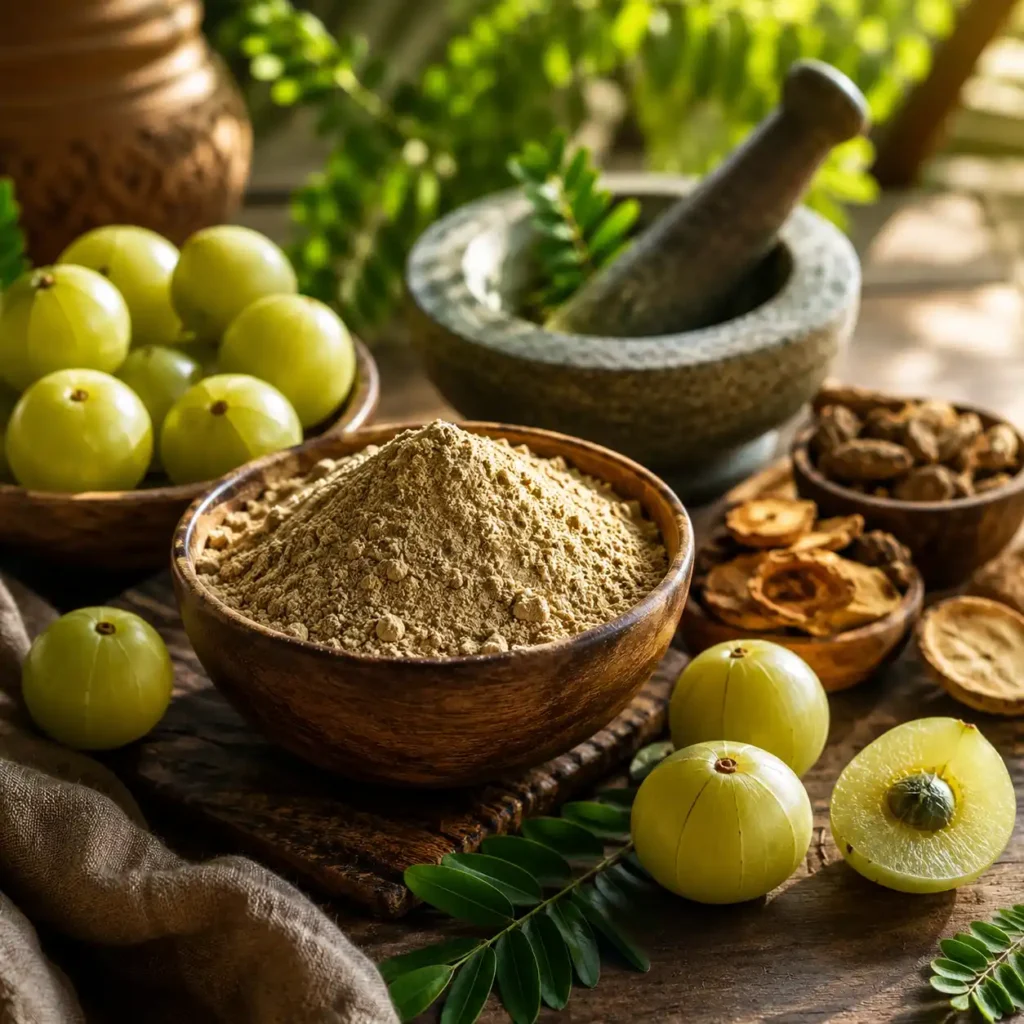
To truly grasp the benefits of Amla powder in Ayurveda, one must understand the concept of Rasayana. In the Ayurvedic tradition, a Rasayana is a substance that promotes longevity, rejuvenates the cells, and provides resistance against disease.
Amla is unique because it is one of the few substances that possesses five of the six tastes (Rasas)—sweet, sour, bitter, pungent, and astringent—missing only the salty taste. Banyan Botanicals: Ayurvedic Principles.
Balancing the Tridoshas
Ayurveda is based on the balance of three vital energies: Vata, Pitta, and Kapha. Amla is highly revered because it is Tridoshic, meaning it can balance all three constitutions. However, it is most famous for its ability to pacify Pitta.
Because of its cooling nature, it helps “extinguish” the internal heat that causes inflammation, acidity, and skin eruptions.
Traditional Formulations
In India, Amla powder is the primary ingredient in Chyawanprash, a medicinal jam consumed by millions to boost immunity. It is also a key component of Triphala, the legendary digestive formula.
For those searching for the benefits of amla powder in Hindi, it is often referred to as “Amritphal,” which translates to “the fruit of immortality.” In regional Indian wellness, Amla is used for everything from improving eyesight (“Aankhon ki roshni”) to purifying the blood (“Rakt shodhak”). Ayurveda.com: Triphala Benefits.
How to Use & Consume Amla Powder
Learning how to use amla powder correctly is the difference between a wasted supplement and a life-changing habit. Because of its potency and strong flavor, beginners often struggle with consumption. Below are the most effective methods to maximize the health benefits of amla powder.
Traditional Drinking Methods
For internal health, the best way is to learn how to use amla powder for drinking.
The Morning Tonic: Mix 1 teaspoon of Amla powder in a glass of lukewarm water. Stir well and drink immediately on an empty stomach.
The Smoothie Booster: If the taste is too intense, add 1/2 teaspoon to a fruit smoothie. The sweetness of bananas or mangoes perfectly masks the astringency of the powder.
Tips for Adding Superfoods to Smoothies.
Culinary Integration
You don’t always have to drink it. You can incorporate Amla into your meals:
Sprinkled on Fruit: A light dusting on sliced apples or papaya adds a nutritional punch.
In Salad Dressings: Whisk amla powder into olive oil, lemon juice, and black pepper for a vitamin-C-rich vinaigrette. Academy of Nutrition: Top Superfoods.
Frequently Asked Questions
What is amla powder good for?
Amla powder is primarily used for boosting immunity, enhancing hair growth, improving digestion, and maintaining radiant skin. Its high antioxidant content makes it a versatile tool for general longevity and detoxification.
What are the benefits of 1 teaspoon of amla powder?
Consuming 1 teaspoon of amla powder daily provides approximately 250-300 mg of natural Vitamin C. This dose is sufficient to meet your daily antioxidant requirements, kickstart your metabolism, and provide enough fiber to support regular bowel movements. NIH: Vitamin C for Consumers.
What are the benefits of eating amla powder?
When you eat Amla powder, you are consuming the whole fruit’s fiber and tannins. This leads to better blood sugar control, improved heart health by managing cholesterol, and a strengthened immune system that can better fight off seasonal infections. American Heart Association: Healthy Eating.
Can I drink amla powder daily?
Yes, you can and should drink amla powder daily for the best results. Ayurvedic tradition suggests that the cumulative effect of Amla is what provides its “Rasayana” (rejuvenating) properties. However, stick to the recommended dosage of 3-5 grams per day to avoid minor digestive acidity. NCCIH: Ayurvedic Safety Guidelines.
Does Amla powder help with hair regrowth?
Yes. Amla powder improves blood circulation to the scalp and provides essential nutrients to the follicles. It also helps block DHT, a hormone responsible for hair loss, making it highly effective for those experiencing thinning hair. AAD: Hair Loss Treatment Options.
Conclusion
As we have explored in this 4,000-word guide, the benefits of amla powder are not merely anecdotal; they are rooted in thousands of years of traditional practice and confirmed by modern nutritional science.
Whether you are using it as a morning tonic with water, a hair mask with coconut oil, or a metabolic aid on an empty stomach, Amla remains one of the most cost-effective and powerful superfoods available today.
The key to unlocking the health benefits of amla powder lies in three things: quality, consistency, and timing. By choosing organic, pure powder and consuming it daily, you are providing your body with a constant supply of the antioxidants and minerals it needs to thrive in a modern environment.
Start with a small dose, listen to your body, and let this ancient Ayurvedic treasure transform your health from the inside out. Explore More Antioxidant-Rich Beverages.
Authoritative References
- World Health Organization. (2026). Healthy diet fact sheet. https://www.who.int/health-topics/healthy-diet
- A new WHO Collaborating Centre was established to support work on food safety and healthy diets. https://www.who.int/news/item/28-01-2026-new-who-collaborating-centre-established-to-support-work-on-food-safety-and-healthy-diet
- Centers for Disease Control and Prevention. (2026). Nutrition for everyone. https://www.cdc.gov/nutrition/index.html
- National Health Service UK. (2026). Eat well guide. https://www.nhs.uk/live-well/eat-well/
- Mayo Clinic. (2026). Nutrition and healthy eating. https://www.mayoclinic.org/healthy-lifestyle/nutrition-and-healthy-eating
- Harvard Health Publishing. (2026). The importance of hydration. https://www.health.harvard.edu/staying-healthy/the-importance-of-hydration
- WebMD. (2026). The benefits of vitamin C. https://www.webmd.com/diet/features/the-benefits-of-vitamin-c
- Healthline. (2026). 10 proven benefits of vitamin C. https://www.healthline.com/nutrition/10-proven-benefits-of-vitamin-c
- National Library of Medicine. (2026). Antioxidants in health and disease. https://pmc.ncbi.nlm.nih.gov/
- Academy of Nutrition and Dietetics. (2026). Top 10 superfoods. https://www.eatright.org/food/vitamins-and-supplements/nutrient-rich-foods/top-10-superfoods

