



Frying eggplant is widely considered one of the most rewarding yet challenging tasks in the kitchen. How to fry eggplant? When done correctly, the result is a golden-brown exterior with a creamy, custard-like interior that melts on the tongue.
However, when done incorrectly, you end up with a greasy, soggy, and unappealing mess. This happens because eggplant is essentially a botanical sponge; its cellular structure is filled with tiny air pockets that are eager to soak up every drop of oil they touch.
Learning how to fry eggplant the right way is about mastering the science of that sponge-like texture. Whether you are looking for a traditional deep-fry, a quick pan-sear, or a modern, healthy air-fried alternative, this guide will walk you through the professional techniques used in 2026 to achieve maximum crispiness with minimum grease.
From classic Italian breaded slices to light Asian-style stir-fries, we will cover every method to ensure your fried eggplant is a success every time. For a delicious application, try our eggplant parm pizza that showcases how fried eggplant absorbs complementary flavors beautifully.
Understanding Eggplant Before Frying
Before you reach for the skillet, you must understand the ingredient. Eggplant is a member of the nightshade family, and its physical properties are unique among common vegetables.
According to the USDA FoodData Central, eggplant is low in calories yet rich in fiber and anthocyanins—making proper cooking methods essential for retaining these nutrients.
The Sponge-Like Texture
If you were to look at a slice of eggplant under a microscope, you would see thousands of tiny air-filled cells. When you ask how to cook eggplant effectively, you must realize that as soon as the vegetable hits the heat, those air pockets collapse.
If there is oil present, it rushes into those spaces. This is why many beginners find their pan dry after just seconds—the eggplant has literally “drunk” the oil.
Research from ScienceDirect Food Research confirms that oil absorption in fried vegetables is directly related to cellular structure and cooking temperature.
Choosing the Right Cooking Method
Which cooking method is best for eggplant? It depends on your health goals and the dish you are making.
- Deep Frying: Best for traditional texture and flavor, especially for appetizers.
- Pan Frying: Ideal for quick side dishes or stir-fries.
- Air Frying: The 2026 gold standard for those wanting a crispy result with up to 80% less oil.
- Oven Frying: Best for large batches, such as when preparing an Eggplant Parmesan for a crowd.
The Harvard T.H. Chan School of Public Health emphasizes that cooking method selection impacts both nutrient retention and caloric density. For more vegetable prep inspiration, see our guide on how to cook broccoli.
Selecting the Fruit
For frying, look for “Globe” (American) or “Italian” varieties. They have a higher density than the long, thin Japanese varieties, which helps them hold their shape when sliced into rounds for breading.
The University of Illinois Extension provides research-backed guidance on selecting produce at peak freshness for optimal cooking results.
Do You Need to Soak Eggplant Before Frying?
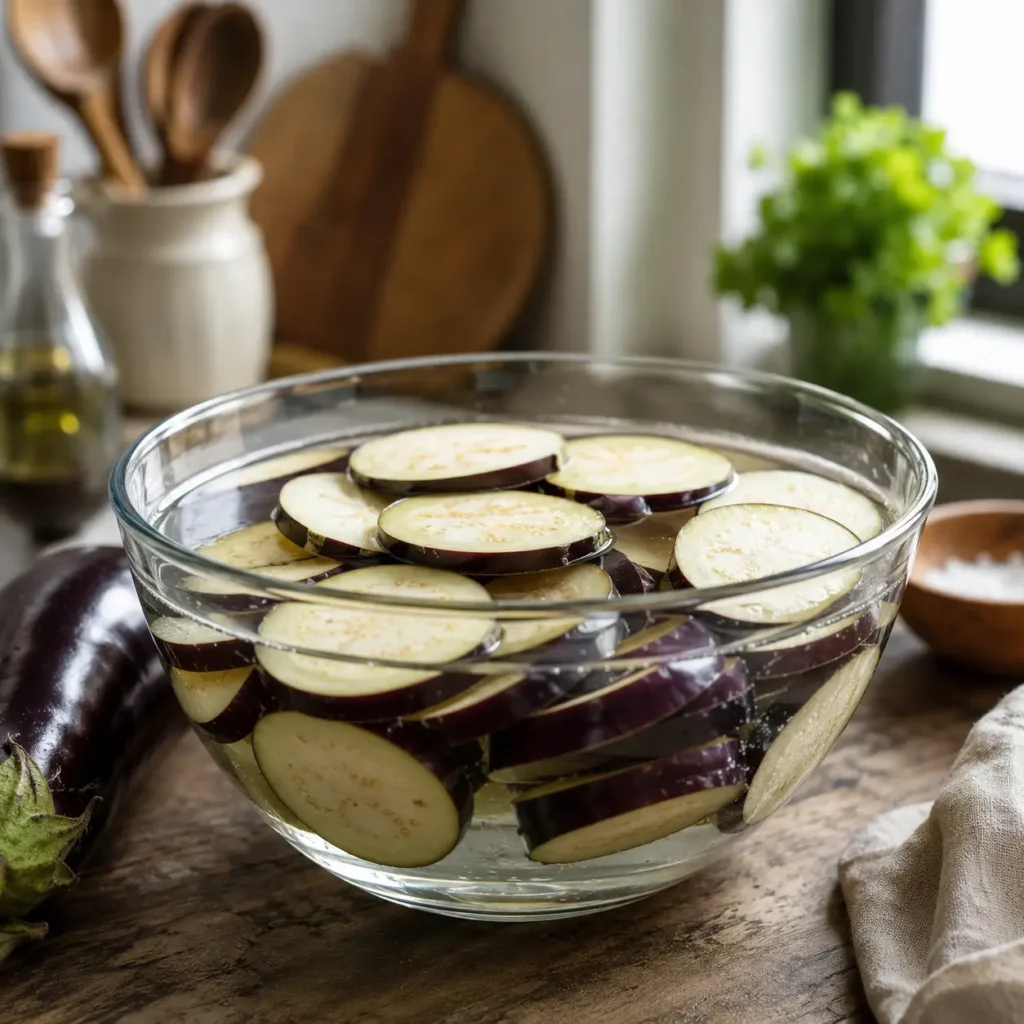
One of the oldest debates in the culinary world is: why do you need to soak eggplant before frying? Traditionally, people soaked eggplant in salted water to “draw out the bitterness.”
The Mayo Clinic notes that proper vegetable preparation techniques can reduce bitterness and improve digestibility.
The Bitterness Myth
In 2026, most commercial eggplants are bred to be “low-bitter.” The extreme bitterness associated with 20th-century eggplants is largely a thing of the past. Therefore, soaking for flavor is often unnecessary for modern varieties.
Understanding whether olive oil is good for cooking helps you select fats that enhance fried eggplant dishes without overwhelming delicate flavors.
When Soaking Actually Helps
While you may not need to soak for bitterness, soaking in salt water can still be a tactical move. The salt draws out moisture and collapses the air pockets before the eggplant hits the oil.
This means the eggplant is less “thirsty” and will absorb significantly less grease. If you have the time (20–30 minutes), a salt soak or a dry salt “sweat” is highly recommended for a lighter final product.
The Academy of Nutrition and Dietetics confirms that salt-prepping vegetables can improve texture and reduce fat absorption during cooking.
Should You Peel Eggplant Before Frying?
Home cooks often wonder: Are you supposed to peel eggplant before you fry it? There is no right or wrong answer, but there are texture and aesthetic considerations.
The Cleveland Clinic emphasizes that vegetable skins often contain the highest concentration of antioxidants and fiber.
Skin Texture
The skin of a large Globe eggplant can be tough and fibrous. When fried, it can sometimes become “plasticky” or hard to chew. If you are serving a dish where tenderness is the priority—like a delicate stir-fry—peeling is recommended.
For more heart-healthy cooking guidance, explore “Is fried food bad for heart health.
Flavor and Appearance
The skin contains the most nutrients and provides a beautiful purple contrast to the golden-brown flesh. For fried eggplant slices, leaving the skin on helps the slices maintain their structural integrity; without the skin, the slices can fall apart or turn into “mash” in the pan.
A popular middle ground is “zebra peeling,” where you peel alternating strips of skin to balance tenderness with structure.
How to Cut Eggplant for Frying & Stir Fry
The geometry of your cut dictates the cooking time and the “crunch-to-cream” ratio.
The FDA Food Safety Guidelines emphasize that uniform cutting promotes even cooking and reduces food safety risks.
Slices for Breading
For traditional fried eggplant slices, aim for a thickness of 1/2 inch. Any thinner and the eggplant will vanish into the breading; any thicker and the center may remain raw while the outside burns.
Cubes and Batons
When learning how to cut eggplant for stir fry, uniformity is key. Cubes (1-inch) are excellent for absorbing sauces, while batons (the size of a thick French fry) are ideal for Asian-style high-heat frying.
Pair cut eggplant with our homemade marinara sauce for quick, flavor-packed meals.
Chinese-Style Cuts
In Chinese cuisine, eggplants are often “roll-cut.” You cut at a diagonal, rotate the eggplant a quarter turn, and cut again. This creates irregular shapes with a high surface area, which is perfect for preparing eggplant for stir fry because it maximizes the areas where the sauce can cling.
For air fryer enthusiasts, explore our PowerXL air fryer recipes for beginners to achieve crispy results with less oil.
How to Fry Eggplant on the Stove
Pan frying is the most common method for a reason: it’s fast and allows for precise control over the browning process.
The American Heart Association recommends using heart-healthy oils and proper temperature control when pan-frying vegetables.
Step-by-Step Pan Frying
- Prep: Slice your eggplant and pat it completely dry. Any surface moisture will cause the oil to splatter and steam the vegetable instead of frying it.
- Heat the Pan: Use a heavy-bottomed skillet (cast iron is best). Add enough oil to coat the bottom generously.
- The Temperature Check: How to fry eggplant in a pan successfully requires hot oil. Drop a small piece of bread or a pinch of flour in; if it sizzles immediately, you are ready.
- Don’t Overcrowd: Give the slices space. If they touch, the temperature of the oil drops, and the eggplant will start to boil in its own juices.
How Long to Pan Fry Eggplant?
Typically, it takes 3 to 5 minutes per side over medium-high heat. You are looking for a deep mahogany brown. The eggplant should feel soft and give way easily when pressed with a spatula.
The Johns Hopkins Medicine notes that proper cooking temperatures ensure both safety and optimal texture in vegetable preparation.
How to Fry Eggplant Without Absorbing Too Much Oil
This is the “Holy Grail” of eggplant cooking. To know how to fry eggplant without absorbing oil, you must use physics to your advantage.
Research published in MDPI Foods confirms that pre-treatment methods significantly reduce oil uptake in fried vegetables.
Technique 1: The Microwave Pre-Cook
Place your cubes or slices in the microwave for 2 minutes before frying. This collapses the air pockets using steam rather than oil. When you move them to the pan, they will already be “pre-shrunk” and won’t act like a sponge.
Technique 2: The Egg Wash Shield
Using an egg wash creates a protein barrier. When the egg-coated eggplant hits the hot oil, the protein sets instantly, forming a “shield” that prevents the oil from penetrating into the flesh.
This is the secret to how to fry eggplant with less oil while maintaining a rich mouthfeel. The World Health Organization encourages cooking methods that preserve nutrients while minimizing added fats.
Technique 3: High Temperature
Never put eggplant into lukewarm oil. If the oil isn’t hot enough to sear the exterior immediately, the eggplant will simply sit and soak up the fat like a piece of bread.
For those managing blood sugar, eggplant is an excellent low-glycemic option. Explore our guides on pumpkin recipes for diabetics and whether black beans are good for diabetics for more diabetes-friendly meal inspiration.
How to Fry Eggplant Crispy
The most common complaint from home cooks is that their eggplant turns out “soggy” or “floppy.” To learn how to fry eggplant crispy, you must focus on moisture evaporation and surface area.
The American Diabetes Association recommends non-starchy vegetables like eggplant as foundational foods for balanced blood sugar management.
The Role of Cornstarch
While flour is the traditional choice, cornstarch is the secret weapon for 2026 home chefs. Cornstarch has a higher amylose content than all-purpose flour, which means it creates a thinner, crispier, and more brittle crust that stays crunchy even as the eggplant cools.
For the best results, use a 50/50 mix of flour and cornstarch. For weight management goals, understanding foods that burn belly fat fast can complement your plant-forward cooking strategy.
The Double-Fry Method
Borrowing a technique from the world of French fries, a “double fry” can transform the texture. You fry the eggplant slices once at a lower temperature, 325°F, to cook the interior to a creamy consistency, remove them to drain, and then flash-fry them at a higher temperature, 375°F, right before serving.
This ensures the outside is vapor-dry and ultra-crisp. The National Institutes of Health confirms that proper cooking techniques preserve both flavor and nutrient density in vegetables.
Spacing and Oil Depth
How to fry eggplant without it getting soggy is often a matter of logistics. If you use too little oil, the temperature drops the moment the vegetable hits the pan, leading to oil absorption.
Ensure you have at least 1/4 inch of oil and never let the slices touch each other.
How to Fry Eggplant With Flour, Egg, and Cornmeal
This “triple-threat” coating is the hallmark of Southern and Mediterranean styles. Each layer serves a specific purpose in the fried eggplant architecture.
The PennState Extension provides research-backed guidance on breading techniques for optimal texture and flavor.
The Classic Flour-Egg-Breadcrumb Method
- Dredge: Lightly coat the slice in seasoned flour. This dries the surface so the egg can stick.
- Dip: Submerge in a beaten egg wash. The egg acts as the glue and the oil-repellent shield.
- Coat: Press the slice into breadcrumbs or panko. Panko is preferred for maximum “nooks and crannies” that catch the heat.
The Cornmeal Crunch
For a more rustic, “fried green tomato” style texture, swap the breadcrumbs for cornmeal. How to fry eggplant with cornmeal results in a gritty, satisfying crunch that stands up well to heavy sauces.
It is particularly popular in soul food and rural Italian cooking. For antioxidant-rich ingredient inspiration, explore our guide on the benefits of cloves to enhance your fried eggplant dishes with complementary spices.
Fried Eggplant with Flour and Egg Only
If you prefer a lighter, more “tempura-like” finish, you can use fried eggplant with flour and egg only. This is known in some regions as “eggplant in negligee.”
The result is a soft, golden skin that is savory and delicate, allowing the flavor of the eggplant to take center stage. For more balanced meal inspiration, explore our chicken and broccoli recipe to complement your fried eggplant creations.
How to Fry Eggplant Without Flour or Egg
For those following vegan, gluten-free, or Paleo diets, you can still achieve a fantastic result without traditional binders.
The Culinary Institute of America emphasizes that creative ingredient substitutions can maintain flavor and texture while accommodating dietary restrictions.
The “Naked” Fry
How to fry eggplant without flour involves high heat and precision. You can fry “naked” slices as long as they have been salted and pressed to remove moisture. The natural sugars in the eggplant will caramelize, creating a brown, slightly sweet exterior.
Vegan Binders
How to fry eggplant without egg is easily achieved by using a “flax egg” (ground flaxseed and water) or a simple cornstarch and water slurry. In many Asian stir-fries, eggplants are simply tossed in dry cornstarch and fried directly, which is naturally vegan and produces a velvety, shimmering crust.
The American College of Sports Medicine notes that plant-forward cooking supports both cardiovascular health and sustainable eating patterns.
How to Deep Fry Eggplant
Deep frying is the most efficient way to cook eggplant because the vegetable is completely surrounded by even heat, which “shocks” the exterior and prevents the interior from becoming a grease-trap.
The FDA Food Safety Modernization Act provides guidelines for safe deep-frying practices in home kitchens.
Temperature and Timing
How to deep fry eggplant requires a thermometer. You want the oil at exactly 360F to 375F.
How long to fry eggplant? In a deep fryer, cubes take about 2–3 minutes, while thick slices take 4 minutes.
Drainage: Immediately move the pieces to a wire rack over a baking sheet. Do not put them directly onto paper towels, as the steam trapped between the eggplant and the towel will turn the bottom of your crispy eggplant soggy within seconds.
How to Air Fry Eggplant
The air fryer has changed the game for how to fry eggplant in an air fryer. It offers the “fried” experience using convection air instead of a vat of oil.
Research from PubMed Central confirms that air-frying preserves more heat-sensitive nutrients than traditional deep-frying methods.
The Oil Spray Technique
You cannot go “oil-free” and expect a fried result. The secret to how to air fry eggplant is a light, even coating of oil from a mister. Spray the slices, flip them halfway through, and spray again.
Timing and Temperature
How long to air fry eggplant slices? At 400°F (200 °C), it usually takes 12 to 15 minutes.
Spacing: Just like in a pan, if you overlap slices in the basket, they will steam. For a large eggplant, you will likely need to cook it in two or three batches.
How to Fry Eggplant in the Oven
If you are cooking for a family, the stovetop can be tedious. Frying eggplant in the oven allows you to “fry” 20 slices at once.
The CDC Physical Activity Guidelines emphasize that home cooking supports healthier eating patterns and portion control.
The Crispy Oven Trick
To get an oven-baked eggplant to taste fried, you must preheat the baking sheet. Put the tray in the oven while it preheats to 425°F. When you place your breaded, oil-misted slices onto the hot metal, they start “frying” immediately on contact.
Best Rack Placement
Place your tray in the bottom third of the oven. This is where the heat is most intense, mimicking the direct heat of a frying pan. How to roast eggplant for a fried effect requires high heat and a well-greased surface.
How to Stir-Fry Eggplant
Asian stir-frying focuses on the “creamy” side of the vegetable. How to stir-fry eggplant usually involves Chinese or Japanese varieties, which have thinner skins and fewer seeds.
The American Heart Association recommends stir-frying as a heart-healthy cooking method that preserves vegetable nutrients.
The High-Heat Flash
In a wok, use a high-smoke-point oil (like peanut or grapeseed). The goal is to sear the outside of the cubes in under 60 seconds and then add your liquid components (soy sauce, vinegar, broth).
The eggplant will instantly absorb the sauce, turning into a flavor-packed, silky component of the meal.
How to Fry Eggplant for Eggplant Parmesan
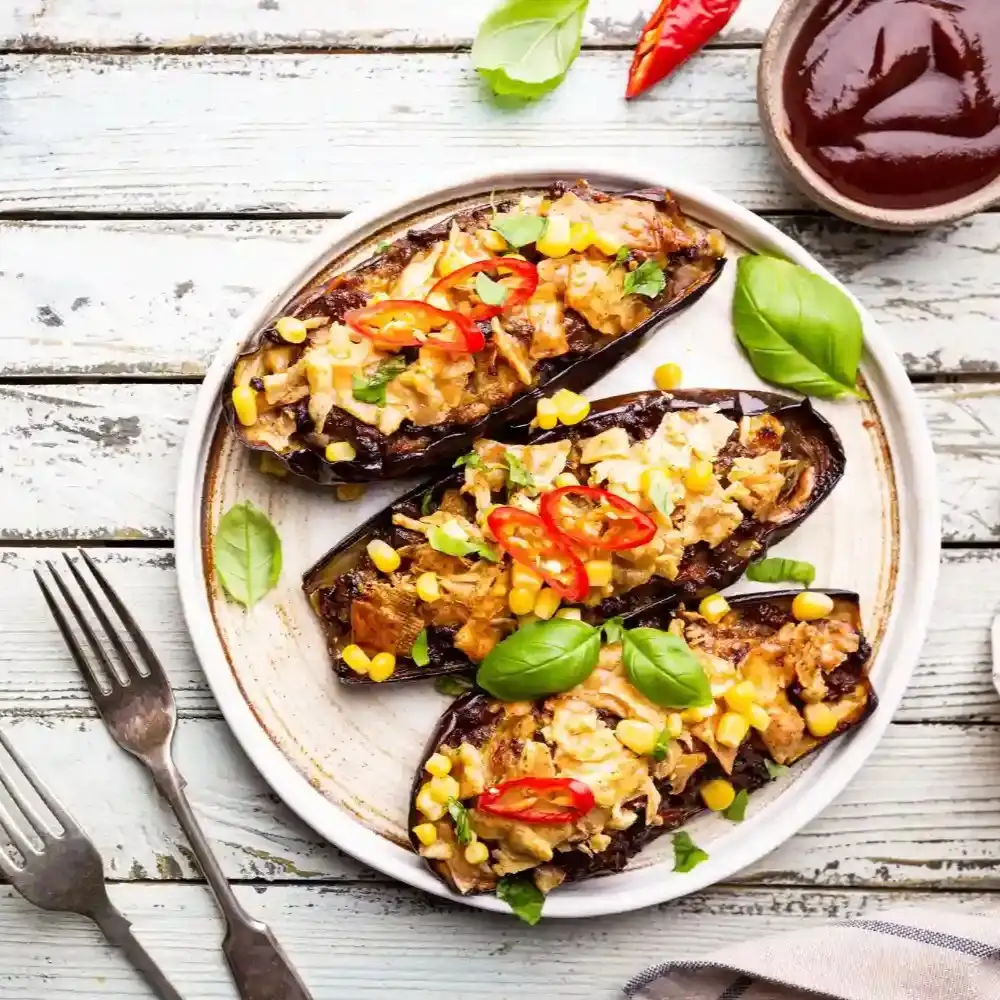
Eggplant Parmesan (Melanzane alla Parmigiana) is the ultimate test of a cook’s frying ability. The goal is to create slices that are sturdy enough to stand up to layers of tomato sauce and molten cheese without becoming a structural failure.
The Mayo Clinic notes that balanced meal preparation supports long-term cardiovascular and metabolic health.
The Breading Strategy
When learning how to fry eggplant for eggplant parmesan, the “dry-wet-dry” method is non-negotiable. Use seasoned flour, followed by a garlic-heavy egg wash, and finish with a mixture of Panko and finely grated Parmesan cheese.
The Parmesan in the breading caramelizes in the oil, creating a savory “armor” that prevents the sauce from making the vegetable soggy during the final bake.
Frying vs. Baking for Parm
While many modern recipes suggest baking the slices to save calories, traditionalists insist on frying. If you want the “best fried eggplant recipe ever” for your Parmigiana, pan-fry the slices in olive oil until they are just a shade darker than golden.
Let them drain on a wire rack for at least 20 minutes before layering. This “resting” period allows the crust to set, ensuring your lasagna-style layers remain distinct and elegant.
Easy Fried Eggplant Recipes
To put your new skills into practice, here are three easy entry-level fried eggplant recipes easy enough for a weeknight but tasty enough for guests.
The Academy of Nutrition and Dietetics encourages experimenting with vegetable-forward recipes to increase dietary diversity.
1. The 10-Minute Skillet Sauté
- Best for: Beginners wanting a healthy side dish.
- Method: Cube a Globe eggplant into 1-inch pieces. Toss with olive oil, salt, and smoked paprika. Fry in a cast-iron skillet over medium-high heat until the edges are charred and the centers are creamy. Finish with a squeeze of fresh lemon and chopped parsley.
2. Crispy Cornmeal “Fries.”
- Best for: Kids and appetizer platters.
- Method: Cut eggplant into batons. Dip in buttermilk and then dredge in a 50/50 mix of cornmeal and flour. Deep fry at 375°F for 3 minutes. Serve with a spicy marinara or a yogurt-garlic dip.
3. Air Fryer Garlic Slices
- Best for: Low-oil enthusiasts.
- Method: Slice Japanese eggplant into rounds. Lightly spray with avocado oil. Sprinkle with garlic powder and sea salt. How long to air fry eggplant slices? 12 minutes at 400°F, flipping halfway. The result is a chip-like snack that is guilt-free.
Common Mistakes When Frying Eggplant
Even experienced chefs can falter when dealing with the eggplant’s unique anatomy. What are some common mistakes when frying eggplant? Avoid these three pitfalls:
The FDA Food Safety in Your Kitchen provides essential guidance for avoiding common cooking errors.
Overcrowding the Pan
This is the #1 cause of sogginess. When slices are too close together, the moisture escaping from the vegetable is trapped as steam. Instead of frying, you are steaming. Always cook in batches.
Using Cold Oil
If the oil doesn’t “jump” when the eggplant hits it, the eggplant will act like a sponge. Always wait for the oil to reach at least 350°F.
Applying Salt Too Late
If you want to draw out moisture, salt the eggplant 30 minutes before frying. Salting during the frying process only seasons the surface; it doesn’t help with the texture.
Frequently Asked Questions
Why do you need to soak eggplant before frying?
You don’t need to soak modern eggplants for bitterness, but soaking in salt water for 20 minutes collapses the air cells. This prevents the eggplant from absorbing massive amounts of oil, resulting in a lighter, crispier dish.
The University of Minnesota Extension confirms that salt-prepping vegetables improves texture and reduces fat absorption during cooking.
Are you supposed to peel eggplant before you fry it?
It is a matter of preference. Small, young eggplants have tender skin that is delicious when fried. Large, older Globe eggplants can have tough, bitter skin. If the skin feels thick and leathery, it is best to peel it or “zebra peel” it.
Which cooking method is best for eggplant?
For flavor, deep frying is king. For health and daily meals, air frying is the best method as it provides a similar crunch with 80% less fat.
The Harvard T.H. Chan School of Public Health emphasizes that cooking method selection impacts both nutrient retention and caloric density.
How long to fry eggplant?
- Pan-fry: 3–5 minutes per side.
- Deep-fry: 2–4 minutes until golden.
- Air-fry: 12–15 minutes at 400°F.
How to fry eggplant without absorbing oil?
The most effective trick is to microwave the slices for 2 minutes before they hit the pan. This “pre-collapses” the sponge-like cells, meaning they won’t have room to soak up the oil once they start frying.
Research from Food Research International confirms that pre-treatment methods significantly reduce oil uptake in fried vegetables.
Conclusion
Mastering how to fry eggplant is a journey from understanding a “sponge” to creating a “delicacy.” There is no single “best” way that fits every occasion, but there is a best way for your specific goal.
If you want the ultimate Italian comfort food, the breaded pan-fry is your best friend. If you are looking for a healthy, crispy snack, the air fryer is your most powerful tool. And if you are in a rush to get dinner on the table, a high-heat stir-fry will never let you down.
The key across all methods is heat management, moisture control, and giving the vegetable the space it needs to shine. With these 2026 techniques in your culinary toolkit, you can confidently turn this misunderstood nightshade into the star of your dinner table.
Authoritative References
- USDA FoodData Central. (2026). Eggplant, raw. https://fdc.nal.usda.gov/
- ScienceDirect – Food Research International. (2025). Oil absorption in fried vegetables. https://www.sciencedirect.com/
- Harvard T.H. Chan School of Public Health. (2026). Healthy cooking methods. https://www.hsph.harvard.edu/nutritionsource/healthy-cooking/
- Mayo Clinic. (2026). Nutrition and healthy eating. https://www.mayoclinic.org/healthy-lifestyle/nutrition-and-healthy-eating
- Academy of Nutrition and Dietetics. (2026). Smart ways to prepare vegetables. https://www.eatright.org/
- Cleveland Clinic. (2026). Healthy cooking techniques. https://my.clevelandclinic.org/health
- FDA. (2026). Food safety guidelines. https://www.fda.gov/food/buy-store-serve-safe-food
- Johns Hopkins Medicine. (2026). Nutrition and food safety. https://www.hopkinsmedicine.org/health
- World Health Organization. (2026). Healthy diet fact sheet. https://www.who.int/health-topics/healthy-diet
- American Heart Association. (2026). Healthy eating recommendations. https://www.heart.org

