



Eggplant is a culinary marvel, but it is notoriously temperamental. Many home cooks have experienced the frustration of buying a beautiful, glossy aubergine only to find it soft, brown, and bitter just two days later.
Learning how to store eggplant the right way is essential to preserving its delicate texture and mild, earthy flavor. Unlike sturdier vegetables like potatoes or carrots, eggplant is highly sensitive to temperature, moisture, and ethylene gas.
According to the USDA FoodData Central, eggplant is low in calories yet rich in fiber and anthocyanins—making proper storage critical for retaining these nutrients.
The best way to store eggplant depends entirely on how soon you plan to use it. While it thrives in cool, humid environments, the standard modern refrigerator is often too cold for long-term fresh storage, yet the kitchen counter is often too warm.
The National Center for Home Food Preservation emphasizes that understanding produce-specific storage requirements reduces food waste and preserves nutritional quality. This guide provides a comprehensive roadmap for every storage scenario—from keeping a garden harvest fresh for the week to preserving a winter supply in the freezer.
By following these 2026 industry-standard practices, you can minimize food waste and ensure your eggplant is always ready for the pan. For a delicious application of properly stored eggplant, try our eggplant parm pizza that showcases how preserved eggplant absorbs complementary flavors beautifully.
How to Pick a Good Eggplant at the Store
Proper storage begins before you even leave the grocery store. If you start with a fruit that is already past its prime, no amount of specialized storage will save it. Knowing how to pick eggplant at the store displays is the first line of defense against spoilage.
The University of California, Davis Postharvest Center provides research-backed guidance on selecting produce at peak freshness.
Signs of Peak Freshness
A fresh eggplant should feel heavy for its size, indicating high moisture content. Look for skin that is smooth, extremely glossy, and uniform in color. If the skin looks dull or matte, the eggplant is likely old and will have a bitter taste and spongy texture.
The Firmness Test
Gently press the side of the eggplant with your thumb. How to pick a good eggplant at the store relies on the “rebound” test: if the flesh yields slightly but bounces back immediately, it is perfect. If the indentation remains, it is overripe and will spoil rapidly.
Conversely, if it is rock-hard, it may have been harvested too early and won’t develop the proper creamy texture. Finally, check the cap (calyx) and stem; they should be bright green and free of mold or drying. The Mayo Clinic advises that selecting fresh produce is the foundation of nutrient-dense meal preparation.
Should You Refrigerate Fresh Eggplant?
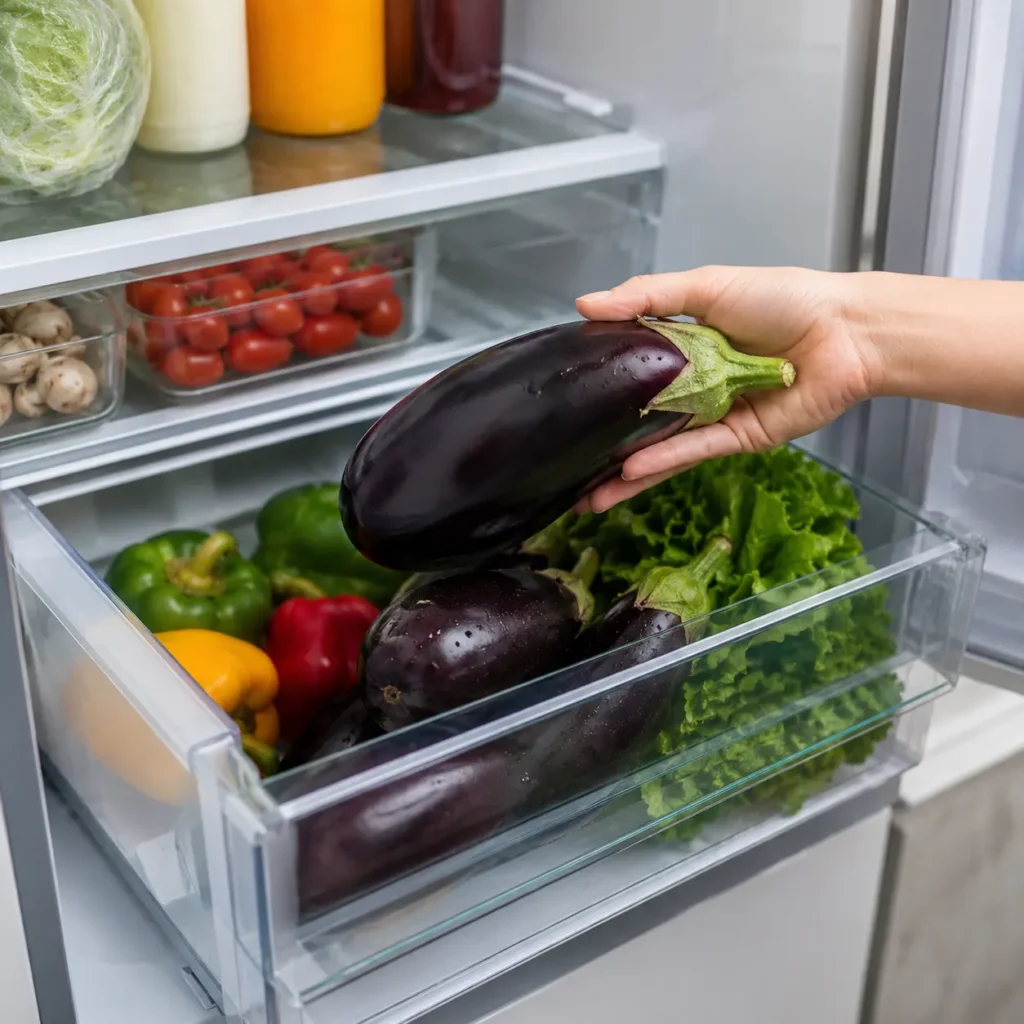
One of the most debated topics in produce management is: should you refrigerate fresh eggplant? The answer isn’t a simple yes or no, but rather a matter of timing and temperature.
Cold Sensitivity Explained
Eggplants are tropical plants by nature and are highly susceptible to “chilling injury.” Most refrigerators are set to roughly 38°F (3°C), which is significantly colder than the eggplant’s “happy place” of 50°F to 54°F (10°C to 12°C).
When stored at standard fridge temperatures for more than a couple of days, the eggplant will develop soft spots, skin pitting, and browning of the internal flesh. Research from Cornell University Cooperative Extension confirms that chilling injury in tropical vegetables accelerates spoilage and nutrient degradation.
When Refrigeration is Necessary
So, do eggplants need to be refrigerated? If your kitchen is warmer than 70°F, or if you don’t plan to eat the vegetable within 24 hours, the refrigerator becomes a necessary evil. In a warm environment, eggplant will dehydrate and turn bitter overnight.
The fridge slows down the decay process, even if it slightly compromises the texture over several days. Understanding whether olive oil is good for cooking helps you select fats that enhance preserved eggplant dishes later.
How to Store Eggplant at Home
If you are lucky enough to have a cool pantry or a basement, you have the ideal environment for storing fresh eggplant. For those living in standard modern homes, you must choose between the counter and the fridge.
Counter vs. Fridge Storage
For the best flavor and texture, store your whole eggplant on the counter in a cool spot away from direct sunlight. In these conditions, it will stay fresh for 2 to 3 days. If you need it to last longer, you must move it to the refrigerator, where it can last up to 5 to 7 days, though you should watch closely for the chilling injuries mentioned previously.
The Harvard T.H. Chan School of Public Health notes that proper produce storage preserves both flavor and nutrient density.
Humidity and Airflow
Regardless of where you keep it, storing an eggplant properly requires high humidity but good airflow. Never store an eggplant in a sealed plastic bag on the counter; the trapped moisture will cause it to rot within hours.
Instead, keep it loose or in a perforated bag that allows the skin to breathe. The FDA Food Safety Guidelines emphasize that proper airflow prevents bacterial growth during produce storage.
How to Store Eggplant in the Fridge
When the counter is too warm, you need to know how to store eggplant in the fridge to maximize its lifespan. Success here is all about insulation and placement.
The Crisper Drawer Strategy
The best place for your aubergine is the vegetable crisper drawer. This area usually has slightly higher humidity and is shielded from the coldest air circulating near the back of the unit. Set your humidity slider to “high” if your fridge has that option.
Proper Wrapping Methods
To protect the fruit from chilling injury, many experts recommend wrapping the whole eggplant in a paper towel and then placing it inside a breathable or perforated plastic bag. The paper towel absorbs excess surface moisture, while the bag prevents the skin from shriveling.
When learning how to store eggplant in the refrigerator, remember: do not wash it until right before you are ready to cook. Moisture on the skin during storage is the fastest way to invite mold. The Cleveland Clinic provides guidance on safe food handling practices to prevent spoilage.
How to Store Eggplant in the Refrigerator Long-Term
If you find yourself needing to keep an eggplant for more than five days, you are entering the realm of “long-term” fresh storage. How to store eggplant in the refrigerator long-term is a game of constant monitoring.
Moisture and Ethylene Control
Eggplants are “ethylene sensitive.” If you store them next to high-ethylene producers like apples, bananas, or tomatoes, they will ripen and rot at double the normal speed. Ensure they are isolated in their own drawer. The Academy of Nutrition and Dietetics emphasizes that proper produce separation extends shelf life and maintains quality.
When to Pivot to Freezing
Check your eggplant daily. If you notice the skin losing its luster or the stem beginning to turn brown, you have reached the limit of fresh storage. At this point, you should search for how to store eggplant long-term by shifting to the freezer.
It is better to freeze a slightly-past-prime eggplant than to let it rot in the fridge. For more vegetable prep inspiration, see our guide on how to cook broccoli.
How to Store Eggplant After Cutting
The moment you slice into an eggplant, a chemical reaction called oxidation begins. The polyphenols in the flesh react with oxygen, turning the creamy white interior into an unappealing brown.
Knowing how to store eggplant after cutting is critical for meal prepping. The Johns Hopkins Medicine notes that minimizing oxidation preserves both visual appeal and nutrient content.
Oxidation Prevention
If you have half an eggplant left over, do not just toss it in a bowl. How to store cut eggplant effectively requires two things: an acid buffer and an airtight seal. Rub the exposed flesh with lemon juice or a light layer of salt.
The acid in the lemon juice acts as an antioxidant, delaying the browning process.
Airtight Storage for Cut Pieces
Once treated with lemon, wrap the cut end tightly with plastic wrap, ensuring the wrap is in direct contact with the flesh to minimize oxygen exposure. Place the wrapped piece in an airtight container.
When considering how to store eggplant once cut, remember that it should be used within 24 hours for the best results. Pair cut eggplant with our homemade marinara sauce for quick, flavor-packed meals.
How to Store Cut Eggplant in the Fridge
When you have prepared cubes or slices for a recipe but aren’t quite ready to turn on the stove, you need to know how to store cut eggplant in the fridge without it turning into a brown, oxidized mess. Unlike a whole eggplant, cut pieces have a very high surface-area-to-oxygen ratio.
Best Containers for Cut Pieces
The ideal container is a glass or high-quality plastic airtight container. If you are storing cubes for a stir-fry, place a damp paper towel at the bottom of the container, add the cubes (ideally tossed in a little lemon juice), and place another damp paper towel on top.
This maintains the high humidity the flesh craves without allowing it to sit in a pool of water.
Shelf Life of Cut Eggplant
Even with the best preparation, the how to store cut eggplant in the refrigerator is short. You should aim to cook these pieces within 12 to 24 hours. Beyond this point, the cell walls begin to break down, and the eggplant will lose its ability to hold its shape during cooking, resulting in a soggy final dish.
For air fryer enthusiasts, explore our PowerXL air fryer recipes for beginners to achieve crispy results with less oil.
How to Store Sliced Eggplant
Slices are particularly delicate because they are usually intended for specific dishes like Eggplant Parmesan or grilling. How to store sliced eggplant requires a “stacking” strategy.
If you have sliced the eggplant into rounds, layer them between sheets of parchment paper or wax paper before placing them in a container. This prevents the slices from sticking together and allows you to remove exactly what you need without damaging the others.
If you have salted the slices to remove bitterness, ensure you rinse and pat them completely dry before storing; otherwise, the salt will continue to draw out moisture, leaving you with a rubbery product.
Understanding whether fried food is bad for heart health helps you balance preserved eggplant preparations with heart-healthy choices.
How to Store Eggplant Without a Fridge
For those living off-grid, homesteading, or simply dealing with a power outage, knowing how to store eggplant without fridge access is a vital skill. This method mimics the “root cellar” conditions used by previous generations.
Root-Cellar Style Storage
The goal is to find a location that is consistently between 50°F and 60°F. This could be a basement, a crawl space, or even a dark corner of a garage. To store eggplant this way:
- Do not wash the eggplant.
- Wrap each fruit individually in brown paper or newspaper.
- Place them in a single layer in a cardboard box or a wicker basket to allow for airflow.
- Keep the box off the floor to avoid dampness.
Under these conditions, a fresh-picked eggplant can last 4 to 7 days, often performing better than it would in the harsh cold of a standard refrigerator. The World Health Organization encourages traditional food preservation methods that reduce waste and support sustainable eating.
How to Store Eggplant from the Garden
Gardeners face a unique challenge: the “harvest glut.” When your plants produce ten fruits at once, knowing how to store eggplant from garden beds is essential to avoid waste.
Harvest Timing and Cleaning
How to store eggplant after picking starts with the harvest itself. Use garden shears to cut the stem, leaving about an inch attached to the fruit; never pull the eggplant off the vine, as this damages the “seal” and leads to rapid rot.
Avoid washing garden-fresh eggplant until the moment of use. The “bloom” (the natural waxy coating) on the skin is the plant’s own defense mechanism against dehydration and bacteria. Simply wipe off any visible dirt with a dry cloth.
The Penn State Extension provides research-backed guidance on garden produce handling.
How to Store Eggplant for Winter
As the growing season ends, you must shift your focus toward how to store eggplant for winter. Since fresh eggplant cannot be kept for months in its raw state, you must turn to preservation methods.
Preserving Methods Overview
- Freezing: The most popular and versatile method.
- Pickling: Excellent for Italian-style antipasto. Eggplant slices preserved in oil, vinegar, and garlic can last 6–12 months in a cool pantry.
- Dehydrating: Eggplant can be sliced thin and dried into “jerky” or rehydrated later for stews, though this is the least common method due to the texture change.
When you decide to preserve eggplant for the winter, you are essentially “locking in” the summer flavor to enjoy during the cold months. For those managing blood sugar, eggplant is an excellent low-glycemic option.
Explore our guides on pumpkin recipes for diabetics and whether black beans are good for diabetics for more diabetes-friendly meal inspiration. The American Diabetes Association recommends non-starchy vegetables like eggplant as foundational foods for balanced blood sugar management.
How to Freeze Eggplant
If you want to know how to store eggplant in freezer bags for up to a year, you must follow the blanching rule. Freezing raw eggplant is the 1 mistake beginners make, as it results in a bitter, mushy mess upon thawing.
The Iowa State University Extension confirms that blanching before freezing preserves texture and prevents enzymatic degradation.
Blanching for Success
To learn how to freeze eggplant properly:
- Slice or Cube: Prepare the eggplant into your desired shapes.
- Blanch: Boil the pieces for 4 minutes in water with a splash of lemon juice.
- Ice Bath: Immediately plunge them into ice water for another 4 minutes to stop the cooking.
- Flash Freeze: Lay the dried pieces on a baking sheet in a single layer and freeze for 2 hours.
- Bag It: Transfer the “rock-hard” pieces into a vacuum-sealed or heavy-duty freezer bag.
Can I freeze eggplant? Yes, and when blanched, it will maintain its quality for 9 to 12 months.
How to Store Eggplant Parmesan & Cooked Eggplant
Cooked eggplant has different storage requirements than fresh eggplant. If you’ve made a large batch of Parmesan, you need to know how to store eggplant Parmesan to prevent the breading from becoming a soggy paste.
Refrigeration vs. Freezing
How long does cooked eggplant last in the fridge? Generally, 3 to 5 days. Store it in a shallow, airtight container. If you have leftovers that you won’t eat within that window, freezing is the better option.
Cooked eggplant dishes freeze exceptionally well. To reheat, avoid the microwave if possible; use an oven or air fryer to restore the “crisp” to the edges and the creaminess to the center. The American Heart Association recommends using heart-healthy reheating methods to preserve food quality.
How to Store Different Eggplant Varieties

Not all eggplants share the same “shelf life genetics.” Depending on the variety you have, how to properly store eggplant might require a slight shift in strategy.
Thin-Skin Varieties
How to store Japanese eggplant or the miniature Fairy Tale variety differs from the thick-skinned Globe type. These varieties have much thinner skins and higher moisture content. Because they lack the “armor” of a Globe eggplant, they dehydrate significantly faster.
The Strategy: These should almost always be stored in the refrigerator, wrapped tightly in a damp paper towel inside a plastic bag.
Duration: Aim to use these within 3 days, as they will begin to shrivel and lose their sweetness much sooner than their larger cousins.
Thick-Skin Varieties
These are the heartiest of the bunch. Their thick, purple-black skin provides a natural barrier against moisture loss. These are the best candidates for how to store eggplant without fridge access or for staying on the counter for a few days.
How to Store Eggplant Seeds
For gardeners and homesteaders, storage isn’t just about the flesh—it’s about the future. Knowing how to store eggplant seeds allows you to preserve specific heritage strains for the next growing season.
Seed Extraction and Drying
Eggplant seeds must be harvested from “over-mature” fruit. This means the eggplant should be past the eating stage—yellowish or brownish in color and soft to the touch.
- Extraction: Grate the eggplant or process it in a blender with water to separate the seeds from the pulp.
- Drying: Spread the seeds in a single layer on a fine mesh screen or a ceramic plate. Never use paper towels, as the seeds will stick.
- Duration: Let them dry in a cool, shaded area for at least two weeks.
Long-Term Seed Storage
Once the seeds are “snap-dry,” place them in a glass vial or a paper envelope. Store them in a cool, dark, and dry place (a “seed vault” style box in the basement is perfect). Properly stored eggplant seeds remain viable for 3 to 5 years. The National Institutes of Health confirms that proper seed storage preserves genetic diversity and food security.
Best Way to Store Eggplant
To help you make a quick decision, use this comparison table to identify the best way to store eggplant based on your current timeline.
| Storage Method | Timeline | Best For | Condition Requirements |
|---|---|---|---|
| Kitchen Counter | 2–3 Days | Immediate use | Cool, dark spot; no plastic bags. |
| Crisper Drawer | 5–7 Days | Weekly meal prep | Wrapped in a paper towel; perforated bag. |
| Root Cellar | 7–10 Days | Large harvests | 50°F to 60°F; wrapped in newspaper. |
| Freezer | 9–12 Months | Long-term prep | Must be blanched or cooked first. |
| Pickled/Jarred | 1 Year | Pantry storage | Vinegar and oil immersion; airtight. |
What is the best way to keep eggplant fresh? For the average home cook buying groceries on a Sunday, the crisper drawer method (insulated with a paper towel) is the most reliable balance of longevity and quality.
For weight management goals, understanding foods that burn belly fat fast can complement your plant-forward meal prep strategy.
Common Storage Mistakes to Avoid
Even with the best intentions, a few simple errors can ruin your produce. Avoid these pitfalls to ensure your eggplant stays delicious:
Washing Too Early
Never wash an eggplant before putting it into the fridge. Surface moisture acts as a catalyst for bacterial growth and mold, especially around the cap.
Airtight Sealing on the Counter
If you leave an eggplant in a sealed plastic bag at room temperature, it will “sweat.” This trapped moisture leads to rapid fermentation and rot.
The “Apple” Mistake
As mentioned, storing eggplant near apples or bananas is the fastest way to turn it brown. Keep your nightshades separate from your high-ethylene fruits.
Skipping the Blanch
When freezing, skipping the blanching step is a fatal error. The enzymes will turn the eggplant bitter and grey within weeks of being in the freezer. The University of Minnesota Extension emphasizes that blanching is critical for frozen vegetable quality.
Frequently Asked Questions
Do eggplants need to be refrigerated?
It depends on your timeline. If you are eating it within 24 hours, the counter is better for texture. If you need 3–7 days, the refrigerator’s crisper drawer is necessary to prevent dehydration.
Can I freeze eggplant?
Yes, but you must blanch it first. Boil slices for 4 minutes and then cool in an ice bath. This preserves the texture and prevents the eggplant from becoming bitter in the freezer.
How do you preserve eggplant for the winter?
The most effective ways are freezing (after blanching), pickling in oil and vinegar, or cooking it into a finished dish like Eggplant Parmesan, and freezing the entire tray.
How long does cooked eggplant last in the fridge?
Cooked eggplant, such as sautéed cubes or roasted halves, lasts 3 to 5 days in an airtight container. Always reheat in an oven or air fryer to maintain the best texture.
How to store eggplant?
A popular tip often shared on Reddit is the “zebra peel” method for storage. Some users recommend peeling strips of the skin before storing cut halves to reduce the surface area
where bitterness can concentrate, though most culinary experts recommend keeping the skin intact until the moment of cooking. For more balanced meal inspiration, explore our chicken and broccoli recipe to complement your preserved eggplant creations.
Conclusion
Mastering how to store eggplant is a fundamental skill for any efficient kitchen. By treating this vegetable as the sensitive, cold-averse fruit that it is, you can extend its life and preserve its culinary integrity. Remember the golden rule: cool but not cold for the short term, and blanch before you freeze for the long term.
Whether you are a gardener protecting a hard-earned harvest or a home cook looking to save half an eggplant for tomorrow’s lunch, the techniques of moisture control and temperature management remain the same.
Store your eggplant with care, keep it away from ethylene-producing neighbors, and always prioritize airflow. With these 2026 best practices, you can finally say goodbye to soggy, bitter aubergines and hello to perfectly creamy eggplant dishes every time.
For antioxidant-rich ingredient inspiration, explore our guide on the benefits of cloves to enhance your preserved eggplant dishes with complementary spices.
Authoritative References
- USDA FoodData Central. (2026). Eggplant, raw. https://fdc.nal.usda.gov/
- National Center for Home Food Preservation. (2026). Freezing eggplant. https://nchfp.uga.edu/
- University of California, Davis Postharvest Center. (2026). Eggplant storage recommendations. https://postharvest.ucdavis.edu/
- Dry Canning Raw Vegetables is an Unsafe Practice. https://nchfp.uga.edu/blog/dry-canning-raw-vegetables-is-an-unsafe-practice
- University of Minnesota Extension. (2026). Freezing vegetables for quality. https://extension.umn.edu/preserve-and-prepare/freezing-vegetables
- Carbohydrates. https://nutritionsource.hsph.harvard.edu/carbohydrates/
- Iowa State University Extension. (2026). Preserve the Taste of Summer. https://www.extension.iastate.edu/
- FDA. (2026). Buy, store, and serve safe food. https://www.fda.gov/food/buy-store-serve-safe-food
- Mayo Clinic. (2026). Nutrition and healthy eating. https://www.mayoclinic.org/healthy-lifestyle/nutrition-and-healthy-eating
- Harvard T.H. Chan School of Public Health. (2026). The Nutrition Source: Vegetables. https://www.hsph.harvard.edu/nutritionsource/vegetables/

